Pope John Paul II died six years ago today. Thank God for his life, work, and witness.

Saturday, April 2, 2011
Pope John Paul II died six years ago today. Thank God for his life, work, and witness.
A complicated story, whose aim, it seems to me, is to highlight the distance between liberalism and democracy.
Friday, April 1, 2011
A new study shows that, of American women with two or more children, 28% have children with multiple fathers -- roughly the same percentage of American adults who have college degrees.
Don't miss Larry Solum's fantastic April Fool's scholarly papers. My favorite is the abstract from Richard Posner's piece, "What Do Deities Maximize?" and this line in particular: "Given omnipotence and omniscience, it follows that all states of affairs already accord with the preferences of an omnipotent and omniscient deity, leading to the paradoxical conclusion that rational action by such an entity is impossible."
The best thing about Solum's tom-foolery is its near-plausibility.
It's snowing this morning in Philadelphia, but the Phillies are opening their season at 1:05pm at Citizens Bank Park against the Astros. Hope is a theological virtue in the Christian tradition, and in this instance it's aided by the best pitching rotation in baseball.
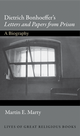
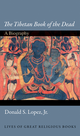
Princeton University Press has an intriguing new series. It is discussed by Jeremy F. Walton at the The Immanent Frame. Here is what Princeton has to say about the series together with the current list in the series. Future books in the series can also be found here.
Lives of Great Religious Books is a new series of short volumes that recount the complex and fascinating histories of important religious texts from around the world. Written for general readers by leading authors and experts, these books examine the historical origins of texts from the great religious traditions, and trace how their reception, interpretation, and influence have changed--often radically--over time. As these stories of translation, adaptation, appropriation, and inspiration dramatically remind us, all great religious books are living things whose careers in the world can take the most unexpected turns.
 |
|
 |
|
 |
Thursday, March 31, 2011
One of my favorite issues in criminal law is the choice of evils -- the rule that the defendant is justified if, setting aside certain side-constraints, he breaks the law in order to avoid or abate some other, much graver social harm. And one of the most well-known philosophical expositions of the choice of evils is Philippa Foot's and Judith Jarvis Thomson's "trolley problem": a trolley on a track is speeding out of control, and there are 2 people directly in its path. You are on the trolley, and have the power to divert the trolley to another track, where it would kill only one person. Should you do nothing or take action to divert the train?
Every so often, the choice of evils actually shows up in a real case, and it did about a week ago in the New York Court of Appeals case, People v. Freddy Rodriguez. Even more surprisingly, the case raises a quasi-trolley problem scenario. Here's what happened. Somebody named Rios parks his "overloaded box truck" on a hill, with the truck facing downhill. He turns the truck off, leaves the keys in the ignition, and goes into a store. While he's in the store, the truck goes down the hill, killing one person and seriously injuring two. But there was a dispute about how the truck got down the hill.

We've already discussed a NYC billboard from the same organization, and this one -- headed for the south side of Chicago -- is sure to trigger some heated debates. Putting aside the troubling claims (e.g., accusations of genocide) made by the sponsoring organization, I think the basic message of the billboard -- think twice about the human lives cut short by abortion -- is powerful and needed. It's obviously not a message that is needed only by the African American community, however, and to the extent that there is an implicit suggestion that President Obama was more vulnerable to abortion solely because he is African American (though born to a white mother), the billboard is on some shaky and disturbing ground. We need to account for the nexus between race and socioeconomic conditions so as not to present a misleading picture, though I realize that nuance is not the billboard's primary aim.
Here's John Allen, weighing in on the Lautsi case, which has already been mentioned several times here at MOJ. He writes, of the decision:
The outcome could recalibrate Catholic attitudes towards secularism at the gut level, providing a powerful boost for the “open door” approach. For bonus points, it’s also generated fresh ecumenical and inter-faith momentum … not bad for a day’s work. . . .
The decision represents a victory for the view that when faced with what seems like incomprehension and hostility, the best response is to make arguments rather than to hurl anathemas. Especially at a time when Benedict XVI has called for a “New Evangelization” in the West -- which sort of presumes an “open door” psychology -- that’s no small thing. . .
Now, I agree that arguments are to be preferred, as a vehicle for engagement, to anathemas, but -- with all due respect to Allen, who certainly knows the lay of the Church's land better than I do -- this comparison felt a bit forced to me, a bit aimed at a straw-man. It's not been my (limited) experience that many serious Catholics -- "conservative" or "liberal" -- insist that, no, best just to not engage and to instead "hurl anathemas." More "in play", it seems to me, is the disagreement between those who want to engage, in arguments (not anathemas), on certain sensitive / divisive / controversial issues with respect to which the Church's teachings are something of a scandal, and those who think that arguments about such matters should be shelved, and common ground sought elsewhere. It seems to me that the answer to this disagreement is (something like) "both"; that is, look for (through arguments, not anathemas), find, and enjoy common ground wherever it is to be had but also propose uncomfortable and challenging truths (again, in and through arguments).
Story here. A constitutional-law-teaching friend of mine once (mischievously?) wrote an examination that involved evaluating a federal ban (one that, the exam stated, relied on Congress's power to "enforce" the 14th amendment's equal-protection requirement).
It strikes me that the law will probably not reduce by very many the number of abortions in Arizona. It does, however, I would think, have a symbolic / educational / pedagogical effect; it makes (some) people think about abortion differently, even though it will probably not limit any person's ability to obtain an abortion.
StatCounter
PageViews
Since February 19, 2008
