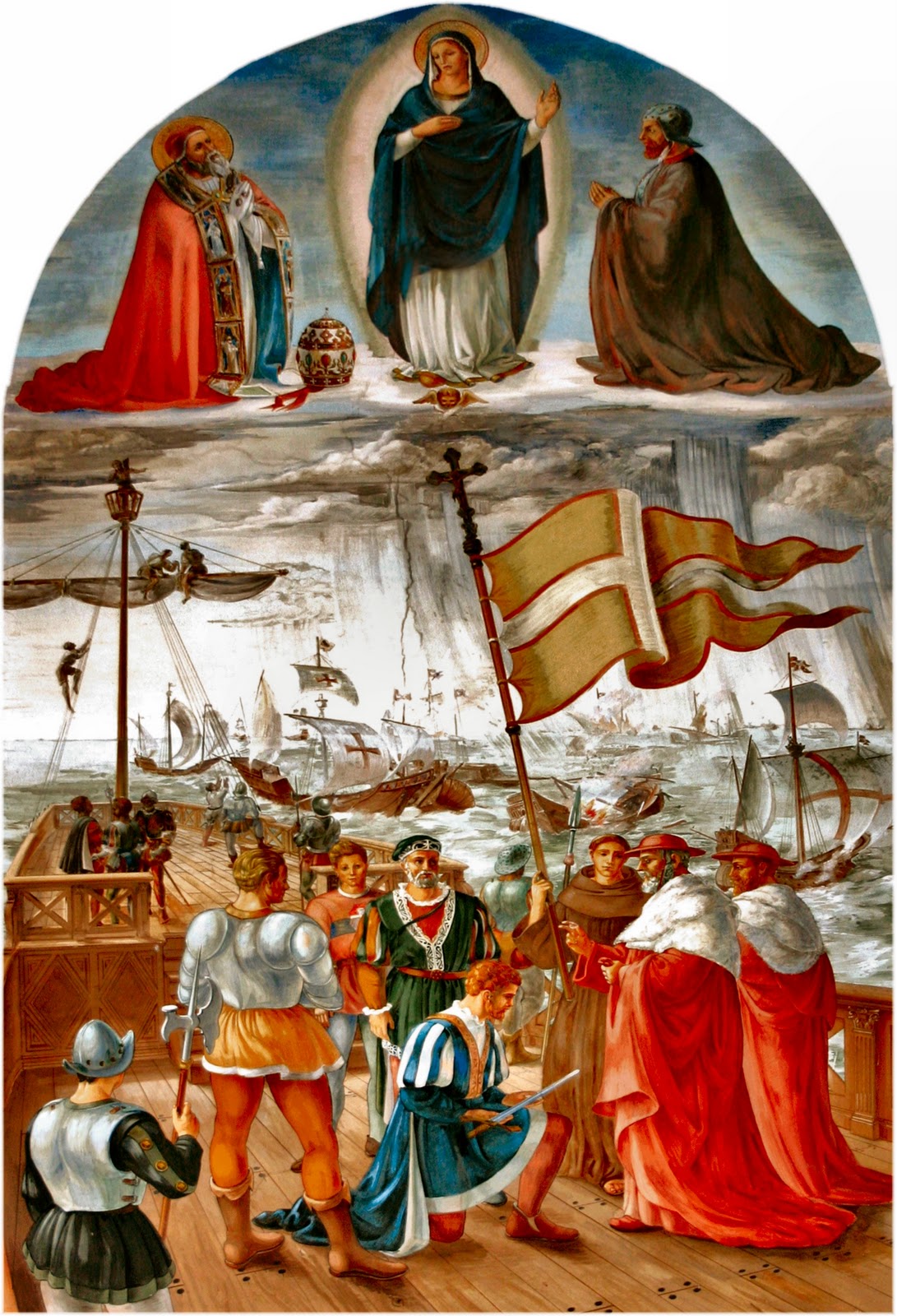
I am very pleased to announce a project being headed up by Stefanus Hendrianto, S.J. (who is a colleague of mine this year at Notre Dame):
Dear colleagues, friends, and students of Father Bob Araujo,
In the last twenty years of his active ministry, in Spokane, Rome, New York, Boston and Chicago, Rev. Robert John Araujo, S.J., has been a faithful priest, a prolific scholar, an exemplary teacher, a caring colleague and a dear friend to all of us.
In honouring Father Araujo’s life, his service to the Church and his great dedication to legal academia, we would like to invite you to contribute a chapter to a volume, which we are planning to place in 2016.
The book will include five areas of academic interest of Father Araujo: Natural Law & Legal Philosophy, Religious Freedom, Public International Law, Catholic Social Teaching, and Legal Education. Our wish is to incorporate writings by his colleagues, friends and students, primarily in those areas of study (though not exclusively). We are hoping to make this volume as an opportunity for all of us to get together to continue working on issues that are important to humanity, the Church, the world.
If you are interested in this venture, as we hope you are, please take note of the following:
- The facilitator of this project is Stefanus Hendrianto, S.J., a Jesuit Scholastic from Oregon Province, with support of Rick Garnett of the University of Notre Dame Law School and John Breen of Loyola University Chicago Law School.
- An initial agreement should be submitted to the facilitator of the volume by email ([email protected]) by October 19, 2015, the feast of North American Martyrs.
- An abstract of 150-200 words should be submitted to the facilitator by email ([email protected]) preferably on the birthday of Father Araujo, October 30th, 2015. Abstracts should feature the working title of the proposed chapter and the details of the corresponding author.
- Prospective contributors are encouraged to write a chapter specifically for the volume. Nevertheless, it is also possible to draw on already published work, adapting this to address the volume theme. Copyright clearance for work that has already been published is entirely the responsibility of the contributing authors, and evidence of such clearance may be required by the publishers when we submit the final draft of the volume.
- The first draft of the chapter is to reach the facilitator by March 12, 2016, on the feast of the canonization of St. Ignatius of Loyola and St. Francis Xavier. Language editing is the responsibility of the authors.
- We will be aiming to have a gathering of the contributors from different part of the country to discuss their work on March 28, 2016 (on the anniversary of the final vow of Fr. Bob Araujo). But this gathering is contingent upon our ability to solicit funding for this project.
- The final draft will need to by April 22 2016 - the feast of Mary, Mother of the Society of Jesus- for onward transmission to the publishers.
This book, "The Rise of Corporate Religious Liberty" -- to which I contributed this chapter on "The Freedom of the Church" -- can be preordered (in paperback, even!) now! "Run, don't walk . . ."
This chapter is part of a collection that reflects the increased interest in, and attention to, the corporate, communal, and institutional dimensions of religious freedom. In addition to summarizing and re-stating claims made by the author in earlier work – claims having to do with, among other things, church-state separation, the no-establishment rule, legal and social pluralism, and the structural role played by religious and other institutions – the Article responds to several leading lines of criticism and attempts to strengthen the argument that the idea of “the freedom of the church” (or something like it) is not a relic or anachronism but instead remains a crucial component of any plausible and attractive account of religious freedom under and through constitutionally limited government. It also includes suggestions for some workable and – it is hoped – faithful translations of it for use in present-day cases, doctrine, and conversations.
The Article’s proposal is that “the freedom of the church” is still-important, even if very old, idea. It is not entirely out of place – even if it does not seem to fit neatly – in today’s constitutional-law and law-and-religion conversations. If it can be retrieved and translated, then it should, not out of nostalgia or reaction, but so that the law will better identify and protect the things that matter.
With permission, I am posting a copy of the Red Mass lecture that Judge Diarmuid O'Scannlain recently delivered to the St. Thomas More Society in Milwaukee. Here is a link: Download DOS Red Mass lecture
As one would expect, the lecture is thoughtful and learned. Among other things, Judge O'Scannlain asks "what does Obergefell prescribe for the future of religious liberty in America?" Like the man says, "highly recommended."
I enjoyed Arthur Brooks's piece in the New York Times:
. . . Francis’ secular admirers often stumble at his apparent preoccupation with evil. In an impromptu speech to schoolchildren in Harlem, he disconcertingly asked: “But who is it that sows sadness, that sows mistrust, envy, evil desires? What is his name? The devil.”
Some dismiss this as a clerical tic or South American eccentricity. It is nothing of the sort. The word “devil” comes from the Greek verb diabolos, meaning “slander” or “attack.” And “demon” comes directly from the Greek root meaning “to divide.” For Francis, happiness comes from unity, both with God and with one another. Unhappiness comes from division from either — which comes from the Dark One.
Many people around the world have found themselves attracted to the pope’s warm message of unity. And well they should be — unity is in short supply in our unhappy world today. But Francis is asking for more than a mass chorus of “Kumbaya.” He is in the hunt for the whole human soul.
"The great act of faith is when a man decides he is not God."
-Oliver Wendell Holmes
This past Sunday the Archdiocese of Washington celebrated its annual Red Mass at St. Matthew's Cathedral in our nation's capital. While many dioceses and universities celebrate this mass which seeks to "to invoke God’s blessings on those responsible for the administration of justice as well as on all public officials" the mass in Washington has some unique characteristics. Held annually on the Sunday before the first Monday in October when the Supreme Court begins its term, the mass attracts some of the leading jurists and public officials in the nation (although Slate noted only 4 Supreme Court Justices attended this year, trying to connect that observation to Pope fatigue).
Archbishop Wilton Gregory delivered the homily and his sermon touched on language, faith, and humility. In my own legal scholarship, I have written repeatedly about the importance of accurate labels and precision in the language of legal discourse. The choice of terms matter greatly as terms and labels convey social values which then influence the criminal law (think about terms such as "kiddie porn" vs. "images of child sexual abuse" or "child prostitute" vs. "sex trafficking victim"). Therefore, I found myself particularly struck by Archbishop Gregory's emphasis on language.
As the Catholic Standard reported, Archbishop Gregory noted that “[i]t is the mission of those involved in the administration of justice to help us all to understand the meaning of the words of the law and their consequence for the common good that flow from those laws. Yours is the noble vocation of choosing words and helping us understand the meaning of those words that are intended to safeguard and unite our country.” In a world of soundbites, legislative proposals with catchy names, and loose terms such as "non-dangerous drug offender," "victimless crime," and "revenge porn," the devil is in the details. Lawyers, judges, and legislators would do well to take a critical look at language they use, constantly asking what that language conveys about societal values and the seriousness of criminal victimization.
Archbishop Gregory offered other insights and practical guidance to legislators and judicial officials, many of which apply to all of us. But citing to the above Oliver Wendell Holmes quote, he reminded a Cathedral full of Washington luminaries (not to mention those of us sitting in the legal academy seating) of the value of humility. Underscoring the danger of using language to both contravene God's plan for us as well as in a "search to become gods" ourselves, the homily reflected a little of what Pope Francis was attempting to display during his visit - humility. Here's to hoping that message was received.
. . . Cromwell . . . presided over the creation of a Tudor police state aimed at imposing conformity through terror. More than three hundred religious dissidents were executed between 1532 and 1540, years coterminous with Cromwell’s tenure. Yet in Wolf Hall we have Cromwell assuring other characters (and thus the audience) that “we do not do such things”—by which he presumably means torture. If his contention was simply presented as political spin—if we saw him practicing what he says he doesn’t do—that would be one thing. But in fact we never do see Cromwell torturing his victims, whereas Thomas More is shown positively relishing the experience.
. . . [I]nviting viewers to identify with a man who enabled Henry to tyrannize his subjects and force on them a religion they didn’t want is ethically problematic. The show comes perilously close to reproducing the Whiggish view of the Reformation as a much-needed sweeping away of a corrupt and outdated form of medieval Catholicism.
For more on "Wolf Hall's" inaccuracies (and clear anti-Catholic agenda), see this, this, and this.
In my presentation on religious freedom arguments to "reach the persuadable middle," I conclude with three things to learn from Francis in this context.
First, he emphasizes (like others) that freedom for religious organizations is--not solely, but very significantly--"freedom to serve,” especially those in greatest need. As he said in Philadelphia:
[R]eligious liberty, by its nature, transcends places of worship and the private sphere of individuals and families. Our rich religious traditions [also] serve society…. They call to conversion, reconciliation, concern for the future of society, self-sacrifice in the service of the common good, and compassion for those in need. At the heart of their spiritual mission is the proclamation of the truth and dignity of the human person and human rights.
As John Allen remarked in the pre-visit story Rick blogged about some time back, Francis’s emphasis--on "giving the Church freedom and space to bring the Gospel to the ‘existential peripheries of society’"-- is "potentially a game-changer” in the debates over religious freedom. He speaks with credibility about serving those in need. Others with such credibility need to speak up too. As Allen says, this is one the few hopes we have that "the push for religious liberty [might] transcend the divisions often associated with the wars of culture.”
Second, Francis respects and acknowledges other interests and perspectives. In his dialogues with secular/nonbelieving journalists and others of differing views, he goes out of his way to recognize their good will and the contributions they make to the common good. Respect for others must appear not only in how one argues for religious freedom, but also in the substantive scope of freedom that one claims. It is both unsupportable as matter of principle and unwise as a matter of pragmatics to make overbroad assertions that fail to take account of legitimate concerns of justice or policy that may appear on the other side of a dispute. I'm not saying here where those lines should be drawn for any particular case; that's a subject for (many) other posts. I'm just saying that in asserting or defending the (crucial) right to religious freedom, one should also give the kind of sympathetic consideration to others' interests that we rightly claim they should give to interests of religious conscience.
Third, the case for religious freedom should be presented in a way that reflects joy. Not simply dark mutterings about the downfall of society--those dark mutterings are sometimes wrong, I think, and even to the extent they're right, the challenges should be addressed joyfully. Plus expression of joy in the act of service. From EvangeliiGaudium, paras. 12, 15:
The life of the Church should always reveal clearly that God takes the initiative, that ‘he has loved first’ (1 Jn 4:19) and that he alone ‘gives the growth’ (1 Cor 3:7). This conviction enables us to maintain a spirit of joy in the midst of a task so demanding and challenging that it engages our entire life…. Instead of seeming to impose new obligations, [Christians] should appear as people who wish to share their joy, who point to a horizon of beauty and who invite others to a delicious banquet.
My friend and colleague, Carter Snead, who direct's Notre Dame's Center for Ethics and Culture, has a very strong -- indeed, very moving -- statement on Gov. Brown's tragically wrong decision to sign assisted suicide into law in California. Here it is:
By signing legislation permitting assisted suicide in his state yesterday, California Gov. Jerry Brown has threatened the lives and dignity of all vulnerable people, according to O. Carter Snead, University of Notre Dame law professor and director of the University’s Center for Ethics and Culture.
Quoting the highly personal terms in which Brown had cast his decision — “In the end, I was left to reflect on what I would want in the face of my own death,” the governor said — Snead insisted that “Gov. Brown and those like him — affluent, privileged, able-bodied and with supportive families — are not the ones who will pay the price for this new ‘freedom.’”
“What Gov. Brown should have been reflecting on instead,” Snead said, “was the poor, the disabled, the marginalized and the elderly who are now exposed to grave and lethal new risks of fraud, abuse, mistake and coercion. He should have been reflecting on those who are suffering from untreated, but treatable, depression or badly managed, but manageable, pain, people for whom the path of least resistance is now self-administration of lethal drugs.
“Gov. Brown should have been reflecting on the aged, who are now at risk of an entirely new form of elder abuse. He should have been reflecting on the financially disadvantaged, whose insurers will now weigh the low costs of assisted suicide against more expensive palliative treatments. He should have been reflecting on the disabled, who are terrified about the subtle coercion that will now be brought to bear by others who consider their lives not worth living. He should have been reflecting on the path taken by countries like the Netherlands and Belgium, where assisted suicide quickly gave way to euthanasia, first voluntary, then nonvoluntary, in the name of false autonomy and compassion. He should have been reflecting on the experience of Oregon, where there is no meaningful data collection, and virtually no referrals for psychological evaluations or pain management consultations, even though those with suicidal ideation require both forms of basic health care.”
According to Snead, “Gov. Brown has purchased the right to assisted suicide at the expense of the disabled, the marginalized, the poor and the elderly. Shame on him for being so selfish and short-sighted.”