Mirror of Justice

A blog dedicated to the development of Catholic legal theory.
Affiliated with the Program on Church, State & Society at Notre Dame Law School.

Friday, May 4, 2012

How should Catholic Social Thought be employed in policy debates?

My "Catholic Social Thought and the Law" student, Joe Callaghan, shares these thoughts:

Does Catholic social teaching offer ideas and values that might find broad-based acceptance? Yes. And no. Yes in that the final product of Catholic social teaching is often appealing to adherents to other value systems. No in that, to a non-Catholic, to theoretically underpin a policy on ideas like “God’s love” or “Truth” or “human dignity” or “solidarity” rings a bit hollow. Take, for instance, the Universal Declaration of Human Rights. Everyone was able to agree on the fundamental rights of human beings, but I cannot imagine that the process through which the Canadian delegate and the delegate from the USSR arrived at provision of time off from work for periodic holidays and leisure time was at all comparable. At some point (nicely illustrated in Jacques Maritain’s description of the problem posed by the rate at which the commons of society is being filled with rights), some “old right” will come into direct conflict, direct as in litigation-worthy, with a “new right” and lawmakers will have to articulate why the new right is superior or more compelling or more aligned with the statutory scheme or more reconcilable with the Constitution than the “old right.” Eventually, we’ll reach a terminal arrangement of rights and this town will be too small for the both of the two supposedly-absolute rights. What happens then? What happens when Catholic social teaching is the sole distinguishing consideration weighing in favor of one of the rights and you are advocating for that right among non-Catholics? Can you invoke objective Truth as revealed in Creation? Can you cite to the perfect model of love in the Trinity? Is it disingenuous to form your opinion on a legal matter based on your reflection on Catholic social doctrine and then to present an argument based on stare decisis or compelling state interest or some other principle? It seems like I’d have a tough time arguing human dignity by virtue of the imago dei when I know that no one else in the room buys it. And it seems less than honest to argue something other than my true conviction. So, I think that the policy ends reached by Catholic social teaching surely offer ideas and values that might find broad-based acceptance. But, I’m not sure that a full explanation of the reasons that we arrived at certain policy ends wouldn’t convince would-be supporters to turn and run the other way.



Thursday, May 3, 2012

A student's reflection about attending a Catholic law school

Here are some thoughts, about the experience of attending a Catholic law school (i.e., Notre Dame), from a student in my "Catholic Social Thought and the Law" class:

In a way, I am living the dream. As an undergraduate, two things that I was certain about were: (1) I wanted to go to law school (2) If admitted, I would go Notre Dame Law School (NDLS). Accordingly, once I was admitted into NDLS, the choice was easy to attend NDLS. My faith is central to my life and, after attending a public university for my B.A., the thought of attending a tier 1 law school rooted in the Catholic faith was refreshing and exciting. I looked forward to integrating my faith life with my studies and meeting intelligent people who shared my faith. Now that I am two years into my law degree at NDLS and I want to very briefly touch on my inside perspective, as an orthodox leaning Catholic, of NDLS.

    In my opinion, the most “Catholic” part of NDLS is its faculty.  A majority of my professors are serious Catholics and are completely open about their faith life. I love the fact that many of my professors think beyond the letter of the law and approach the law as a means to further the dignity of humankind. However, one complaint I would have is that most of my professors are so diplomatic about controversial issues that I feel it prevents good discussions about some of the more hot button issues of our time

    The student body at NDLS is significantly less Catholic than the faculty. There are a handful of students who came to NDLS because it is a Catholic university but it seems that a majority of students are here for other reasons, such as NDLS’s high ranking or prestigious name. A couple weeks ago I attended mass at the law school on a Wednesday. I was surprised to discover that only 4 of the attendees were law students (although no professors were present). With all that being said, I don’t want to give the wrong impression. There is serious Catholic bent in among the NDLS student body, obviously, much more than you will find among other tier 1 law schools. I have been just a little underwhelmed with the “fervence” of the student body. In NDLS’s defense, it would be a tall task to admit 200 serious Catholics per year and still remain a top-notch law school.

Wednesday, May 2, 2012

The Purpose and Vocation of the Catholic Lawyer

One of my students in the "Catholic Social Thought and the Law" class shared this reflection:

Throughout the semester, as I read the Compendium and other authoritative expositions of the Church’s social doctrine, I often thought “this is incredibly grand and utopian, but how does this affect me?  What do you want me to do about it? ”   The institutional Church largely leaves the details of social policy to the laity.  Benedict has told us that “the direct duty to work for a just ordering of society is proper to the lay faithful.”  But what on earth am I learning in law school that can enable me to “change the world” or help build “a more just society”?  

Law, it seems to me, is—perhaps more than any other human discipline—a study in human anthropology.  Since law serves an important pedagogical function, it is crucial to get it right.  Part of being a Catholic lawyer is allowing the Church to purify our reason and convince us that law must be founded upon what we are as humans.  As John Paul II said, a proper anthropology is essential to the foundations of society and law.  Perhaps the key insight that the Church has about human anthropology is her understanding of human purpose.  

Recently, we read the transcript of a talk by Professor Amy Barrett to the graduates of our law school on what it means to be a “different kind of lawyer,” and her words were so forceful and true that they stayed with me and have helped me think about Catholic social doctrine as a whole— from subsidiarity to the teaching on economics—all of which calls for purposive integration and not isolation into the types of neat and tidy little compartments we tend to put things in when we can’t remember what we’re doing or why we’re doing it.  She said that we should always remember that a “legal career is but a means to an end . . . and that end is building the Kingdom of God.”  

The Church’s deep insight into human purpose tells me that we should never be complacent with the practices of our profession that conflict with its nobility and, as Aristotle would say, the “architectonic” role of the law: practices like creative over-billing, just telling the client what he or she wants to hear, lax and minimalist ethical norms, and going along unreflectively while there are unjust laws that hinder human purpose—with the practices in our profession that have made it the butt of so many jokes.  Instead, though we may not all have the nobility, and the iron will, of a Saint Thomas More, we should at least be willing to make the smaller sacrifices that reflect our great purpose—as individuals and as part of a guild—and to build the respect for our profession and for law that achieving this purpose requires.  In other words, Catholic Social Doctrine at its core does more than just tell us how to think about doing the big things—things that may seem so far out of our reach as to cause us to despair.  By informing us of our ultimate purpose, it shows us how to do the little things and how to order our lives and think about reality as a whole, since the Kingdom of God, like any kingdom, is built brick by brick.  

Tuesday, May 1, 2012

A student makes the case for the Cristo Rey schools

MOJ readers are probably familiar with the work and success of Cristo Rey schools.  A student in my "Catholic Social Thought and the Law" seminar shared these thoughts about the schools:

I have a few friends who work for various Cristo Rey High Schools across the country. As the first of my teacher-friends described the organization’s mission and model, I became fascinated with the concept. These schools only serve economically disadvantaged families. Students earn the majority of their tuition and gain real-world professional experience by working in a corporate office one day each week. Students participate in a rigorous college-preparatory curriculum. Family, community and Catholic school intersect to mutually support the development of these high school students who might otherwise fall through the cracks if they remained in the setting of public education.

The first important aspect of these schools is their commitment to Catholic education. Parents are provided with an avenue to expose their children to a value-oriented education. If students are not Catholic, they can still participate; students of all faiths and cultures are welcome to attend. Additionally, by serving only economically disadvantaged students, participant families are given options about and control over their children’s education that may not otherwise be able to occur. These aspects exemplify the notion that parents possess the fundamental right to make childrearing and education decisions. We discussed these themes in class when exploring the topics of religious freedom and the primacy of the family unit. All this is accomplished through a sustainable financial model that creatively draws in the majority of students’ tuition expenses through the Work Study Program. This program, in turn, has merits of its own. Students at Cristo Rey High Schools benefit from hands-on, real-world professional experience one day each week while they take college-prep courses the other four weekdays. Few peers across the country can boast of this opportunity. This professional experience might spark an interest in a certain career, or, at the very least, I imagine it builds students’ confidence and provides an impressive bullet on a resume that further prepares these students for college. Local businesses also benefit from students’ presence in their places of employment. Barriers likely erode between the corporate world and the world of these economically disadvantaged students, which I’m sure is a valuable educational experience for all involved.

The Cristo Rey Network provides a unique model that led me to contemplate their role as an organization that, while linked to the Church, also mediates between the Individual and the State. As such, it is a daring, powerful model for “shaping souls.”[1]


[1] From our discussion of The Education of Henry Adams


Monday, April 30, 2012

Some advice, from a student, for profs at Catholic Law Schools

One of my "Catholic Social Thought and the Law" students shared with me these thoughts about -- and this advice for -- professors at Catholic Law Schools:

My first day of law school and I’m sitting next to my new roommate in Contracts.  Around us, students cement their plans for the weekend and complain about the reading, asking detailed and irrelevant questions like “But why did AutoZone sponsor the Professional Bull Riders?”  There’s an undercurrent of anxiety in the room, an emotion that becomes so familiar to me over the next few months of on-call classes that I become almost desensitized.  By third year I have the blasé expression of a Hindu cow.  Those first few months, though, I could not only tell you what a Carbolic Smoke Ball is, I could give an impassioned entreaty on behalf of all misled influenza victims everywhere.  I was a little bit of a gunner: I probably would have even made you one if you had promised me a good outline. 

Class starts, and instead of the professor launching into the facts of the case (“WHO IS REGINA?”) or introducing himself (“Contrary to popular belief, I am not married to [professor with the same last name]”), our Contracts professor looks up and makes the Sign of the Cross.  Like dominoes, sixty or so other students do the exact same thing.  The rest of us either make eye contact with each other or stare intently at our laptops while he recites a section of Aquinas’ Prayer for Guidance.  When it’s over, class begins.  It takes about thirty seconds, tops, and it becomes part of our routine. 

It’s an interlude between the hallway and the task at hand, but it takes on a different meaning when finals come around.  I start calling it the “quick and keen,” because that’s all I remember outside of the classroom, and that’s what it becomes for me: “Lord, make me quick and keen.”  First said to make a friend laugh, over the course of the semester it becomes my own prayer, something I say before I take an exam or interview with a potential employer.  

As students, we rarely get moments of silence to reflect in law school; for most of us, life is a mix of classes and chaos.  The “quick and keen” was different, it stayed with me.  When people asked me why I decided to become Catholic during my third year, depending on how much time they have, it’s part of the story.  We’ve all heard about the Butterfly Effect: a professor at a Catholic university starts his class with a prayer and two years later a student is baptized and confirmed in the One True Faith.  That’s far-fetched, but I think there’s a lesson in there somewhere. 

What I’d like to suggest to all Professors is this: if you’re at a University that allows you to be visibly Catholic, take advantage of that opportunity next semester (you can’t start mid-semester; that would be weird).  It doesn’t have to be anything dramatic -- part of the strength of the Contracts prayer was that it was said without any hint of the theatrical, it just set the intention for a class where few of us felt “delicate to interpret or ready to speak.”  From the perspective of someone who wasn’t always Catholic, this kind of prayer isn’t confrontational or in-your-face.  It’s nice.

Catholic Social Thought and "The Hunger Games"

One of my "Catholic Social Thought and the Law" students shared with me these thoughts about Catholic Social Thought themes and "The Hunger Games":

Catholic Social Teaching in the Hunger Games? 

At the stroke of midnight on February 28th, I was sitting in my dorm room, refreshing mockingjay.net for news on when movie tickets would go on sale while resident assistants hovered anxiously nearby. As an assistant rector at the University of Notre Dame, I had never witnessed such enthusiasm for a dorm event (and yes, that includes the Twilight premiere). 

Pop culture sometimes serves as an excellent lens through which to examine faith. Almost every popular book series has garnered a Christian following (e.g., Harry Potter and Twilight). Some have compared Suzanne Collins, author of The Hunger Games, to Dorothy Day. While this might be a stretch, she does make several themes from Catholic Social Teaching accessible for readers young and old, Catholic and non-Catholic. Part of the Hunger Games’ success is probably that it appeals to our fundamental human questions about dignity and solidarity. 

The Hunger Games is set in post-apocalyptic America (renamed Panem), where annually, two children are selected from each district to fight to the death in an arena as punishment for uprisings years ago, and to provide entertainment for the wealthy capital. This is a frightening world where the rule of law has crumbled into rule by man and the vocabulary of the preferential option for the poor and human dignity has virtually become lost. Katniss Everdeen, the heroine of the story, is selected one year and unexpectedly wins. However, her task does not end there. She becomes the mascot of a rebellion against the Panem government. 

Much of the Hunger Games is set in impoverished District 12 (probably formerly Appalachia). Inhabitants are forced to poach for a living, and a vivid scene recounts how Katniss and her family nearly starved to death. Suzanne Collins paints with beautiful brushstrokes the lavish living conditions in the capitol city. Readers can almost taste the delicacies and feel the rush of hot running water for the first time with Katniss. The isolation of the wealthy in the capital is not far off from our world. We do not realize how segmented our world has become until we experience the culture shock accompanies service trips to the third world. 

The frightening part of the capitol’s isolation is the distance the wealthy maintain from the poor. Viewers in the capital watch poor children fight like gladiators for entertainment. What Katniss succeeds in doing is unite the districts and help viewers connect to the desperation of the districts. Part of the rebellion’s strategy is to tap into the television feed of the capital and project raw images that the government has previously censored. This stirs up a compassion for the poor and capitol citizens awake to the true plight of their poor brothers and sisters. 

Another poignant moment in the Hunger Games is when a fellow contestant, Peeta, tells Katniss that he does not want to compromise himself to win the Hunger Games. It is not until the third book that Katniss comprehends what Peeta meant. The Hunger Games had an eerie way of de-humanizing the contestants. The fight for survival (there can only be one winner) brings out the animal instincts of the children. The gamekeepers even used muttations (animals with the human eyes of contestants who had earlier been eliminated) to manipulate the remaining contestants. Peeta does not want to lose his sense of self, and his words would reverberate in Katniss’ mind as she realizes that the capitol has managed to subordinate its residents for so long only because they had removed their sense of dignity.

A law student's thoughts on proposals in Ireland to compromise Confession

Here are some thoughts, from a student in my "Catholic Social Thought and the Law" seminar, on proposed legislation in Ireland:

Sending Priests to Jail for… Well, being Priests: A Defense of the Sanctity of the Confessional and of the Church

            According to a news article issued April 27, 2012 (full story available here: http://www.catholicnewsagency.com/news/irish-bishop-reaffirms-seal-of-confession-amid-legal-controversy/), Catholic priests in Ireland will soon potentially face criminal sanctions if they refuse to violate the sanctity of the confessional, due to pending legislation. Specifically, priests will face up to ten years in prison if they fail to report sex crimes. Irish Justice Minister, Alan Shatter, attempted to justify the proposed legislation by indicating that he does not, “know how anyone could live with their conscience” if they did not report a sex offender to the gardai (Irish police). Although the Federal Rules of Evidence in the United States allow members of the clergy to invoke privilege to refuse to testify about communications that take place under the seal of the confessional, this blatant disregard for the teachings of the Catholic Church in Ireland is quite concerning. In fact, should the legislation pass, not only would the Irish prisons become saturated with Catholic priests, but the entire sacrament of confession (not to mention thousands of Catholic souls) would be compromised.

            According to the Catholic Church as indicated in the Council of Trent, the sacrament of confession, “as a means of regaining grace and justice,” is “necessary at all times” in order to safeguard our souls from sin. Importantly, according to the Council of Trent, this sacrament is as necessary to salvation as is Baptism. It is vital to the functioning of the Catholic Church that the sins confessed during this sacrament are kept, at all times, confidential by the priest to whom the sinner has confessed. If the confessor knew that the priest would be compelled to turn him or her into the police, the person would be far less likely to partake in the sacrament. Moreover, many priests would rather abide by the seal of the confessional than adhere to the law of man, thus exposing many priests to criminal sanctions. Thus, numerous devout but human (and therefore sinful) Catholics would be dissuaded from confessing their sins if the proposed Irish legislation were to become commonplace. Consequently, their souls will be jeopardized and priests will be put in the position either to face 10 years in prison or be excommunicated from the Church. This proposed legislation is insulting to the Church, as it disregards the sanctity of Her sacraments and trivializes the role of Her priests.

Brad Gregory, on "The Unintended Reformation," at the Lumen Christi Institute

This event, on May 8, should be great:

Tuesday, May 8, 4:30 PM
The Unintended Reformation
Brad Gregory, University of Notre Dame
Mark Noll, University of Notre Dame
Rachel Fulton Brown, University of Chicago
Classics 110
1010 E. 59th Street

Co-sponsored by the Department of History

In his latest book, The Unintended Reformation, Brad Gregory identifies the unintended consequences of the Protestant Reformation and traces how it has shaped the modern condition. He argues that hyperpluralism, an absence of a shared sense of the common good, and the triumph of consumerism are each the long-term effects of a distinctive religious movement that marked the end of a period of history in which Christianity provided a framework for a shared intellectual, social, and moral life in the West.

Soccer clubs' logos, religion, and international business

A student of mine, in my "Catholic Social Thought and the Law" class, shared with me this interesting post:

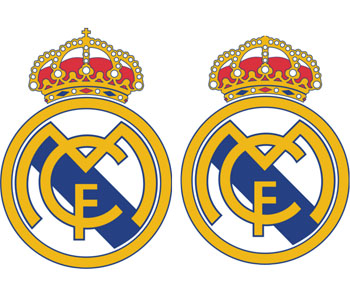
Recently, one of the most established football (soccer) clubs in Europe, Real Madrid, made a very slight change to their official logo.  Here is an old and new version.  Can you see it?  Maybe if you give it a really hard look?  Still not seeing it?  Check out the difference a little more closely.  What’s missing is the cross that adorned the top of the Real Madrid logo.  The cross resided there since 1920, when King Alfonso XIII granted the title Real, or Royal, to the Madrid Football Club.  Granting the royal title to the club transferred the royal coat of arms of the King of Spain to the club, including the globus cruciger at the crest of the crown.  The globus cruciger has long served as a reminder (especially to upstart monarchs of the Middle Ages) of Christ’s dominion over earth.  It also serves as a reminder that the monarchs were supposed to be God’s representative and subordinate on earth.  Thus, symbols such as these were fairly common throughout European Christendom. 

While a symbol like that would likely have been ferociously defended as of twenty years ago, it is suddenly stricken.  Why?  That appears to be the cost of doing business for Real Madrid.  No longer so much a representative of the crown and of Spain, the club is now a business, and a booming one at that.  It is currently the most profitable football club (and sporting team overall) in the world.  But a business must grow and find new markets.  And it just so happens that the hottest new market for football is in the Middle East.  What the Middle East happens to have is a ton of money from oil and natural gas.  A billion dollars, in fact, will go to build the Real Madrid Resort Island in the Emirate of  Ras al-Khaimah in the United Arab Emirates.  There was a stipulation to the financing, however.  The ruler of Ras al-Khaimah, Sheikh Saud Bin Saqr al Qasimi, required the removal of the cross in all materials related to the resort.  Similarly, items related to the club sold in the Middle East will be sans cross. 

What does that say about Real Madrid, Spain, and Europe on the whole?  Religiosity has long been declining in Europe, but Spain has still been seen as a bastion of religious, namely Catholic, influence.  One may come to the conclusion, however, that symbols of a nation’s heritage are ultimately up for sale in an international, multicultural world. Presumably, the current Spanish King, Juan Carlos I signed off on this change, trading a piece of the Catholic history of his nation for increased revenue for the royal club.  And it is the royal club.  Lest anyone forget, the Spanish monarchy has its own premier box seating at Real Madrid’s stadium. 

Is this simply a one-off situation, or indicative of a larger change, particularly one of abandoning all signs relating to Christianity at the first sign of cold, hard cash?  Perhaps a look at Real Madrid’s chief rival, FC Barcelona’s new logo will help answer that question.  You will see that St. George’s cross has been excised of its horizontal beam (making it no longer a functional cross).  What caused this change?  Surprisingly (or not), it involved FC Barcelona signing a $200 million dollar sponsorship deal with the Qatar Foundation and fielding complaints from Saudi Arabia that the St. George’s Cross was painful for Muslims because it evoked images of the crusades.

Friday, April 27, 2012

A (gloomy) observation

Over the course of the last few days and weeks, consuming lots of (and contributing some) commentary in various forms about, e.g., the preventive-services mandate, the Bishops' religious-freedom statement, the Ryan budget and Catholic Social Thought, the Supreme Court arguments in the ACA and SB 1070, the presidential campaign and election, etc., I was struck by what seem to me to be some characteristics of our (and by "our" I'm thinking mainly of "reasonably engaged, informed, and formed Christian citizens) conversations about law, politics, policy, and faith. 

It seems to me that, generally speaking, the following are true:

(1)  People object indignantly to tu quoque, "so's your mother!", and "if only you were consistent . . ." arguments and charges, and to double-standards, and also deploy, and apply, them often.

(2) People assume that those who disagree with them are, at least in part, motivated by something undisclosed, or by ideological precommitments that overdetermine the content of their claims, while they themselves are candid and transparent, and able to transcend ideology in order to identify what the right answer really is.  

(3) People object to pronouncements by religious authorities about "political" matters selectively and strategically / tactically.

(4) People are clear-eyed about the weakness of guilt-by-association arguments, and also entirely happy to press them.

(5) People are sensitive to the important truth that there is (this side of Heaven) almost always room for reasonable disagreement among intelligent, faithful, reasonable people about how best to apply principles, standards, and rules to those facts that are known; and also to the reality that such people will also often disagree about what the "facts" (which include, I suppose, predictions about the effects of particular interventions or omissions) . . . except when they aren't.

(6) People say that we should assume the best of others and their arguments, and avoid a "hermeneutic of suspicion", but don't.

To be clear:  I am, I am sure, among these "people."  I am not claiming innocence.  Sure, the merits matter, and I tend to think (as we all do) that, basically, I'm right about those matters about which I disagree with other people (assuming we are talking about matters about which it's possible to be right).  But still -- I'm not pretending to have entirely clean hands.  (I guess I'm overcompensating, in anticipation of (1)).

So, a serious question:  Given (1)-(6), is there really any hope for productive, charitable, and enlightening conversation and argument (about these matters), among people who don't already (pretty much) agree, outside the context of close personal relationships where trust (and even love) can reduce the incidence of the phenomena described in (1)-(6)?

I very much want the answer to be "yes", but it strikes me that it might be "no."  Hence, the gloominess of my observation.