Monday, April 30, 2012
Soccer clubs' logos, religion, and international business
A student of mine, in my "Catholic Social Thought and the Law" class, shared with me this interesting post:
Recently, one of the most established football (soccer) clubs in Europe, Real Madrid, made a very slight change to their official logo. Here is an old and new version. Can you see it? Maybe if you give it a really hard look? Still not seeing it? Check out the difference a little more closely. What’s missing is the cross that adorned the top of the Real Madrid logo. The cross resided there since 1920, when King Alfonso XIII granted the title Real, or Royal, to the Madrid Football Club. Granting the royal title to the club transferred the royal coat of arms of the King of Spain to the club, including the globus cruciger at the crest of the crown. The globus cruciger has long served as a reminder (especially to upstart monarchs of the Middle Ages) of Christ’s dominion over earth. It also serves as a reminder that the monarchs were supposed to be God’s representative and subordinate on earth. Thus, symbols such as these were fairly common throughout European Christendom.
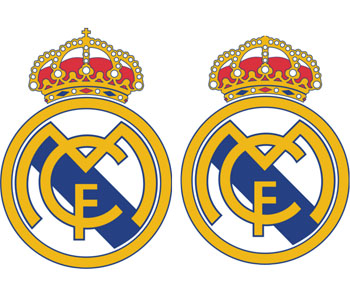
While a symbol like that would likely have been ferociously defended as of twenty years ago, it is suddenly stricken. Why? That appears to be the cost of doing business for Real Madrid. No longer so much a representative of the crown and of Spain, the club is now a business, and a booming one at that. It is currently the most profitable football club (and sporting team overall) in the world. But a business must grow and find new markets. And it just so happens that the hottest new market for football is in the Middle East. What the Middle East happens to have is a ton of money from oil and natural gas. A billion dollars, in fact, will go to build the Real Madrid Resort Island in the Emirate of Ras al-Khaimah in the United Arab Emirates. There was a stipulation to the financing, however. The ruler of Ras al-Khaimah, Sheikh Saud Bin Saqr al Qasimi, required the removal of the cross in all materials related to the resort. Similarly, items related to the club sold in the Middle East will be sans cross.
What does that say about Real Madrid, Spain, and Europe on the whole? Religiosity has long been declining in Europe, but Spain has still been seen as a bastion of religious, namely Catholic, influence. One may come to the conclusion, however, that symbols of a nation’s heritage are ultimately up for sale in an international, multicultural world. Presumably, the current Spanish King, Juan Carlos I signed off on this change, trading a piece of the Catholic history of his nation for increased revenue for the royal club. And it is the royal club. Lest anyone forget, the Spanish monarchy has its own premier box seating at Real Madrid’s stadium.
Is this simply a one-off situation, or indicative of a larger change, particularly one of abandoning all signs relating to Christianity at the first sign of cold, hard cash? Perhaps a look at Real Madrid’s chief rival, FC Barcelona’s new logo will help answer that question. You will see that St. George’s cross has been excised of its horizontal beam (making it no longer a functional cross). What caused this change? Surprisingly (or not), it involved FC Barcelona signing a $200 million dollar sponsorship deal with the Qatar Foundation and fielding complaints from Saudi Arabia that the St. George’s Cross was painful for Muslims because it evoked images of the crusades.
https://mirrorofjustice.blogs.com/mirrorofjustice/2012/04/soccer-clubs-logos-religion-and-international-business.html
Comments
 You can follow this conversation by subscribing to the
comment feed
for this post.
You can follow this conversation by subscribing to the
comment feed
for this post.
Before we all get too critical of the soccer club's decision to change its logo, it would be useful to know what other kinds of alterations corporate and national entities were willing to undergo in order to do business in the Middle East. Do American firms make decisions about which employees to send to work in various Muslim countries based on the religions of thse employees? To be specific, it was my understanding some years ago that American employers were willing to accommodate host countries by, for example, not sending Jewish employees to work (or live) there. Is this still the case? How about employees who are women? I would be delighted to be wrong about this, so I welcome further information on the subject.