Ernan McMullin, now emeritus at Notre Dame, is. as some MOJ readers know, an Irish diocesan priest who is also one of the preeminent historians/philosophers of science of his generation. In the January 26th issue of The Tablet, McMullin has a wonderful review of Francisco Ayala's book Darwin's Gift to Science and Religion. The review is well worth reading ... here.
Saturday, January 26, 2008
Darwin, Evolutionary Biology, and Theology
Faith and Alcoholism
No doubt some MOJ readers are dealing with, or have family members and/or friends who are dealing with, a drinking problem. For a terrific piece on alcoholism, religion, and related matters, I recommend this essay in the January 26th issue of The Tablet: John Waters, Finding God in an empty glass. Click here to print/read.
Friday, January 25, 2008
Abortion, Basketball, and St. Louis University
Some of you may have heard about the controversy at St. Louis University, which is a Jesuit institution. Howard Wasserman, who contributes to the Sports Law Blog, has a post here--a post in which I concur. I must add that Howard was a student of mine at Northwestern Law, more years ago than I care to remember.
The Future of Marriage
[Thanks to Maggie Gallagher for this:]
Can Marriage Survive?
CATO UNBOUND
January 14-21, 2008
Marriage isn't what it used to be. Though divorce has declined from its peak,
marriage certainly is no longer considered an unbreakable covenant. For millions
of cohabiting couples, marriage seems optional, or distant. With gay and lesbian
couples demanding their own nuptials, marriage isn't even just for straight
people anymore. Family is a crucial building block of a decent society, but
marriage has always been at the center of family formation. If
marriage-as-we-know-it is on the rocks, can the family, and society, be far
behind?
Stephanie Coontz, author of Marriage, A History: How
Love Conquered Marriage kicks off this month with a learned lead essay ["The
Future of Marriage"]. Reacting to Coontz, we've lined up the Manhattan
Institute's Kay Hymowitz ["The
Marriage Gap"], author of Marriage and Caste in America: Separate and
Unequal Families in a Post-Marital Age; economists Betsey Stevenson
and Justin Wolfers of the University of Pennsylvania ["Marriage
and the Market"]; and Norval Glenn ["Against
Family Fatalism"], professor of sociology at the University of
Texas.
As always, Cato Unbound readers are encouraged to take up
our themes, and enter into the conversation on their own websites, blogs, and
even in good old-fashioned bound publications. "Trackbacks" are enabled. Cato
Unbound will scour the web for the best commentary on our monthly topic,
and, with permission, publish it alongside our invited contributors. We also
welcome your letters.
Political Orphans in 2008
... is the title of this op-ed, which is subtitled: "Is There Space for Our Pro-Life Ethic?" The authors: Liz McCloskey, who is a doctoral candidate at the Catholic University of America, and Peter Leibold, who is former general counsel of the Catholic Health Association.
Washington Post
January 22, 2008
In this political season, with all the talk about the role of faith in public life, we as a Catholic couple feel very much at home in the conversation and yet still homeless with respect to a perfectly compatible political party or candidate.
When we were born in the early 1960s, it was possible to be both a Democrat and a Catholic without any agonizing pangs of conscience. John F. Kennedy was president; John Courtney Murray was a public theologian; Pope John XXIII was opening a window to the world at the Second Vatican Council. But as we came of age politically, we felt orphaned by the Democratic Party, whose pro-life positions on war, poverty and the environment did not extend to the life of the most weak and vulnerable, those not yet born.
While the moderate wing of the Republican Party provided us a foster home when we worked on the Senate staff of John C. Danforth (R-Mo.), with the likes of former senator Mark O. Hatfield (R-Ore.) and others, the Grand Old Party's move to the right, including its hardening, dominant positions on the Iraq war, access to guns and the death penalty, among other issues, have made it an inhospitable place for us to dwell permanently.
During many elections we find ourselves facing the same dilemma: Which of our values must take a back seat when we go to the voting booth? Do we let our moral concern for peaceful resolutions of conflict, the environment, addressing poverty and aggressive enforcement of civil rights guide our choices? Or do we stand firm on another important issue of conscience and signal our hope for an end to abortion? Often, both choices leave a bad taste in our mouths.
Another option is to simply forget the moral questions and vote our pocketbooks. The two of us have slightly different perspectives on the wisest economic policies to be followed by the federal government, neither of which is embodied perfectly by the dominant political parties. But adopting a moral blindness in the voting booth is simply not an option for those of us who hold religious values dear.
Today's March for Life in Washington brings home this problem. The assumption of abortion opponents is that anyone serious about his or her desire to see an end to abortion will vote for the "pro-life" candidate. Yet there is rarely a candidate, and certainly not a political party, that embodies the consistent ethic of life that would make casting a truly pro-life vote a simple or straightforward choice. If the Democratic Party could adopt a much less disdainful, more welcoming, perhaps even "pro-choice" stance toward those under its tent who have conscientious objections to abortion, we would be much less squeamish about supporting its candidates, and we know that we are not alone in that conviction.
As the 2008 campaign unfolds, we will look for a candidate who will not use rhetoric or a tone seemingly designed to alienate those of us who simply cannot cheer for speeches celebrating the availability of abortion.
We don't see the right to abortion as an example of everything that is right with our democratic system. In fact, we mourn the poverty of a culture that views it as an option to harm the most vulnerable, even in the name of protecting other vulnerable people such as impoverished women and pregnant teenagers. While we may disagree with one another on the correct balance of legal restrictions, social policies and moral suasion that would best reduce the number of abortions, we both hope and pray for its eventual disappearance.
A party and a candidate that truly respect this viewpoint are ones that can adopt these two political orphans.
Come to Boston (College)
2008 Candlemas Lecture: Prophets, Priests, and Kings: Christianity, Confidence, and Humility in the Public Square |
D |
 |
Cathleen Kaveny is the John P. Murphy Foundation Professor of Law at Notre Dame Law School, where her seminars explore relationships among theology, philosophy, and law. Her published essays provide the grounding for full discussion of various issues where Christian ethics and U.S. culture and politics intersect, issues such as abortion, gay marriage, torture, and the cooperation with evil. Often the essays draw upon popular media, for example, The Sopranos and Will and Grace. |
Date and Time: |
Thursday, February 7, 2008 | 7:30 p.m. | |
Location: |
Devlin 101 | |
Of Interest to Particular Audience: |
Faculty, Graduate Students, Public, Undergraduate Students | |
Categorized as: |
Lectures & Readings | |
Sponsored by: |
Lowell Humanities Series, The Church in the 21st Century Center | |
Contact: |
Paul Doherty | |
Contact's Phone: |
617-552-3705 | |
Contact's Email: |
[email protected] | |
Admission fee: |
Free | |
Parking & Directions : |
www.bc.edu/about/maps | |
Thursday, January 24, 2008
Valuing Human Life, Revisited
There is an excellent article in the Jan. 21-28 issue of America. The title: Church Teaching and My Father's Choice. The author: John J. Hardt, who is an assistant professor of bioethics at the Neiswanger Institute for Bioethics and Health Policy at Loyola University Chicago's Stritch School of Medicine. Alas, the article is available only for subscribers. But here are some passages that may encourage you to track down the whole piece:
'IF I'M EVER IN A SITUATION where I'm permanently unconscious and unable to eat," says my father, "I'm begging you: Let me go. I don't want to be kept alive by a feeding tube." We are sitting at my parents' table on a pleasant Sunday morning, with advance health care directives sharing space with coffee cups and the newspaper.
I probe my father's reasoning about such an important decision: "What if I think you're able to recognize us, but you are unable to speak, communicate or engage us? What about end-stage Alzheimer's or Parkinson's, where you might stop eating on your own? You both know that doctors are rather certain that patients in a persistent vegetative state don't experience pain or discomfort, right?"
No response.
"What if I want to keep you alive in that condition?" I ask with a smile.
My father responds with a chuckle. "If there were a decent chance that I'd get better and everything else is working well, then I'd trust your judgment," he tells me. "Otherwise, the answer is no. Let me go!"
"But why," I ask, "if you're unaware of your own condition?"
"Because I know nam that I don't want to continue like that. What am I continuing for? With whom could I communicate? Whom could I love? Would I not have somewhere better to be, anyway?" My father's quip reflects our shared faith in Christ's salvific death and resurrection. "Let me go."
Real people bear both the grace and
the burden of thinking as the church does about the meaning of living
and dying. So it is with my still-living father's words in mind that I
think about a recent statement of the Congregation for the Doctrine of
the Faith concerning the morality of removing artificial nutrition and
hydration from a patient who lives in a persistent vegetative state. I
have my parents' power of attorney for health care, a decision they
made prompted by the publicity surrounding the Terri Schiavo case. I
now have a more personal stake in a discussion that had already engaged
me professionally, as a Catholic bioethicist teaching in a Catholic
medical school. It is now my responsibility as a son who cherishes his
parents to help ensure that the manner of their dying as Catholics will
be consistent with the way they lived as Catholics.....
My father, in our conversation at the kitchen table, for example, did not suggest any inclination to end his life prematurely. He does not seek a false sense of control over his dying that betrays the truth of our Christian narrative, namely, that suffering is constitutive of who we are as brothers and sisters of Christ and that the experience of dying, while possibly frightening and lonely, is ultimately identified with Christ's dying and redeemed in Christ's rising. But his judgment, informed by his faith, is that a massive neurological injury that leaves him permanently unconscious, unable to purposefully eat or swallow, would constitute in itself a fatal pathology, one that carries no obligation to persist any longer in that state.
When I consider my father's questions-"What am I persisting for? With whom could I communicate? Who could I love? Don't I have a better place to be?"-I hear faithful echoes of our Catholic tradition. That tradition consistently affirms that while biological life is an important value, it is not an absolute good. How should my father judge a future burden that is not his now and, were it ever to become his burden, he would not be able to judge?
Perhaps it is in the fourth exception noted by the C.D.F. that my father's thinking finds its voice. While the other three exceptions offered by the congregation focus on objective circumstances, this final exception simply notes those "rare cases" where artificial nutrition and hydration "may be excessively burdensome." This exception stands out because it comes with no modification. It simply holds open a possibility. While the C.D.F. does not offer any examples, it sounds to me like the condition my father described over our kitchen table.
My father's words tell me that he judged the maintenance of his baseline biological existence as a P.V.S. patient to be an excessive burden. It is a burden to him to know now that we, his family, would care for him in this condition for a prolonged period of time. It is a burden to him to know that he would be unable to engage in meaningful human activity. And, finally, it is a burden to him to think that his death from a devastating neurological injury was being held at bay by the insertion of an unwanted and, in his judgment, invasive feeding tube. My father believes that such a procedure would pose an unwanted and unnecessary obstacle to his next life in heaven, the end of a journey he began at birth, the fulfillment of a promise sealed in his baptism.
In other words, my father has judged that the burden of persisting in a vegetative state far outweighs the benefit of being sustained that way. This is, in my view, a very Catholic way of thinking, shared by other faithful Catholics, and consistent with Catholic tradition.
Wednesday, January 23, 2008
Same-Sex Unions, Revisited
[This, from The Opinionator, New York Times online. As some of you know, I concur in Gore's position on this issue.]
January 23, 2008, 5:25 pm
Gore’s Gay Marriage Gambit
It’s widely agreed that Al Gore, private citizen, has done more to move the global political debate than Al Gore, elected official, ever did. Now Gore, who as vice president supported the Defense of Marriage Act, has put up a video on his Current TV Web site in which he stands up for gay marriage: “Gay men and women ought to have the same rights as heterosexual men and women — to make contracts, to have hospital visiting rights, to join together in marriage, and I don’t understand why it is considered by some people to be a threat to heterosexual marriage…”
Gore’s statement, notes Ben Smith at Politico, “pushes the Democratic establishment that much closer to a position he now shares with Eliot Spitzer and some other leading Dems, and is prompting a bit of grumbling in gay political circles that this batch of candidates aren’t quite there.” He continues:
Gore’s words come after the leading presidential candidates have tiptoed up to, but not crossed, the line of support for same-sex marriage. All three support equal substantive rights for gay and lesbians couples, and they’ve sought to woo gay voters in other ways: Elizabeth Edwards has voiced her support for same-sex marriage, for instance, and Barack Obama recently scolded the black church for homophobia, in a speech to an African-American congregation.
Will Gore’s comments up the ante for the candidates if they want to be seen as sincere?
Tuesday, January 22, 2008
A Debate About the Morality of Abortion
[This from the Catholic News Agency, 1/22/08:]
Professors’ abortion debate attracts hundreds at University of Colorado
Professors’ abortion debate attracts hundreds at University of Colorado
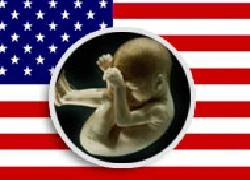
.- A Catholic-sponsored debate about the ethics of abortion packed hundreds into an auditorium on the University of Colorado campus in Boulder, CO this past Friday night. The debate featured two prominent philosophy professors—Drs. Peter Kreeft and David Boonin—who defended their views on the ethics of abortion.
Listeners filled all 288 seats of the auditorium, while others sat in the aisles. Still more sat in the overflow seating in the basement hallway, and even crowded the stairs leading up from the basement, a total audience easily surpassing 400 in number.
The debate, sponsored by the Thomas Aquinas Institute for Catholic Thought, addressed the question "Is abortion morally justifiable?" Dr. Peter Kreeft, of Boston College, answered that it could never be while Dr. David Boonin of the University of Colorado argued that abortion was sometimes a moral choice. Both professors offered many reasons and counterarguments defending their position.
The professors are both prominent in their field and in the public eye. Kreeft has authored more than 45 books dedicated to defending Christian beliefs and understanding suffering, morality, philosophy, life, and God. Dr. Boonin’s 2003 book “A Defense of Abortion” won an honorable mention from the American Philosophical Association. Boonin is also the chair of the University of Colorado's philosophy department.
Dr. Kreeft opened the discussion with an "intuitional" appeal, saying "more people in fact are convinced by seeing, by experiencing, than by arguing." He noted that people usually change their minds through personal relationships rather than through strictly rational analysis. He advised the audience to listen to the "inner shock" of conscience.
Shifting to an explicit rational argument, Kreeft took the position
that a human fetus is a person possessing many rights, including the
right to life. He also argued that people cannot rationally deny the
right to life of the unborn without denying the right to life of
newborns.
He recounted how he once discussed abortion with
"some very intelligent feminists," claiming that they had no argument
justifying abortion that would not also justify infanticide.
"After the argument they came up to me and said 'Congratulations, professor, you changed our minds. We didn't think you could do that.'"
"'Oh, good,' I said, 'you're pro-life now?'"
"'No, we're pro-infanticide'," Kreeft finished, prompting surprised laughter from the audience. "So logical consistency can be a two-edged sword," he noted.
Even someone who was unsure if an unborn child is a person, Kreeft argued, would in the absence of certainty have to refrain from having an abortion. To kill someone without knowing if they are human is still homicide. To act in a rash manner that could kill someone, such as poisonously fumigating a room without being sure it was empty of people, would amount to criminal negligence. Barring certain knowledge that an unborn human is not a person, abortion similarly would be blameworthy even if the human fetus were not a person with the right to life.
Dr. Boonin began his remarks with a general comment criticizing the belief that the only arguments against abortion are religious arguments. "In fact, there are a number of distinct arguments, potentially quite powerful arguments," against abortion that do not refer to God and rely on reasonable premises that people on both sides of the abortion debate would accept. He said Kreeft's opening remarks were examples of such reasoning.
Boonin then presented criticisms of some general pro-life arguments and raised some philosophical concerns about Kreeft's arguments. Boonin said that it was "implausible" to many people that human membership automatically entailed having the right to life. One such case is that of an individual whose capacity for consciousness is lost when most of his brain is physically destroyed.
Boonin suggested that Kreeft's argument that any moral uncertainty about moral status of the unborn child meant all abortions were at minimum morally blameworthy could have radical implications if applied consistently. This "appeal to uncertainty," as he called it, could require pacifism, vegetarianism, opposition to capital punishment, and the advocacy of a moral imperative to give all of one’s excess income to those in need.
Boonin went on to argue that "the right to life is not the right to be kept alive by somebody else." If all human beings shared the same right to life, abortion could be justified using this distinction. Proposing a thought experiment, Boonin suggested the audience imagine being kidnapped and forced to donate bone marrow.
"Suppose you walked out in the park yesterday and a doctor caught you and conked you on the head and knocked you unconscious. You wake up, and the doctor has hooked you up to a bone marrow extraction device. The bone marrow is extracted from you and pumped into me. You ask 'What's going on?' The doctor says 'Don't worry, stay hooked into Professor Boonin for the next nine months, he'll be fine. Disconnect yourself now, because of a bone marrow disease, he's going to die.'"
Most people, Boonin thought, would agree that in this case a person would not have a right to be kept alive. He argued the situation was analogous to abortion. "The fetus isn't just sitting in a lounge chair somewhere," he said, but is in the body of a woman who doesn't wish to be pregnant.
Closing the evening, Boonin thanked the Aquinas Institute for
hosting him. "There is something quite extraordinary about the fact
that the Aquinas Institute invited me to speak this weekend, giving me
equal time with a national representative of the views that obviously
they are passionately committed to."
Father Kevin Augustyn, pastor of St. Thomas Aquinas Parish, closed the meeting with a description of the lecture series’ aim.
"Reason can lead to the threshold of faith, and once across that threshold of faith, then reason still has a role for us to understand God's word and God's ways in our lives. The Aquinas Institute for Catholic Thought exists for that reason, for the search for truth."
Speaking to CNA at a post-debate reception, Father Augustyn further explained the institute’s goals.
“The Aquinas Institute for Catholic Thought is basically our arm for outreach to both Catholic students that come to us, and the university at large. We're trying to engage an important secular university with the Catholic faith. How do you do that? You begin with dialogue, and what we have in common, and we believe reason is on our side,” he said.
Many in attendance found the high turnout remarkable. The debate had been advertised in flyers, mailing lists, and in the diocesan paper and website. Social networks also spread the word. The event’s Facebook.com page on Sunday evening reported 96 confirmed guests and 48 who said they would possibly attend.
Seth James DeMoor, a University of Colorado senior studying history and education, estimated 600 people heard the debate.
“The room holds 300 people, and there were at least 300 people outside the room. This issue is the issue of the generation, and I think the proof is in the numbers. It just shows that this issue is at the forefront of American culture,” DeMoor said.
Monday, January 21, 2008
UNJUST WAR
Sightings 1/21/08
Unjust War
-- Martin E. Marty
A Stupid, Unjust, and Criminal War: Iraq 2001-2007 by priest, sociologist, novelist, and columnist Andrew Greeley is a collection of 121 columns dating back to 2001, in their original form. As the title suggests, the columns are not long on nuance. They have going for them guts, consistency, a readiness to use the language of the prophets and the Church, prescience, and not a little hold on truth in reporting. Columnists who once supported the war and others who were critical all along can profitably compare notes with Greeley .
The Chicago priest, who has a passion for Catholicism, is dispassionate enough to have a lover's quarrel with the Church, and is impassioned about bringing church teaching on wisdom (as opposed to "stupidity"), just war theory (as opposed to "unjustness"), and law-abidingness (as opposed to "criminality") to bear on events of this long, long war. He celebrates what the popes of these years, Vatican spokespersons, and many bishops have had to say for peace and against capital punishment, nuclear armament, war-making in general, and this war in particular. At the same time he mourns that so little of what they said reached the Catholic faithful. And he is scornful of most religious leaders who were cowed into silence for fear of sounding unpatriotic when they might have been helpfully vocal in criticism of governmental and military policy. In a world where many were snookered into blandness or silence, he remains unsnookered.
The Martys compare opinions as we read four daily papers. We come to most agreement on wartime issues when we read Greeley 's syndicated columns in the Chicago Sun-Times. From before the first gun was fired, he stopped just short of charging that we were being led into the war by leaders who, too often, wanted war but didn't count the cost. Now uncontroversial are his once contentious early comments on how unprepared the U.S. administration and military were before they invaded Iraq. Greeley is no pacifist, and recognizes, for example, the "necessity" of World War II and the valor of those who supported the Allied cause. He is not naïve about the scope of the threat of militant Muslims and terrorists, but was suspicious of those Americans who immediately after 9/11 labeled all forms of action and reaction a "War" on terror.
I do not picture that most readers
of Sightings will read this book, either because they do not welcome
priestly comment and criticism or because they have been reading the columns all
along, usually affirming them, and don't need a repeat. Nor can I
quote enough from these pages to document how true to conditions and prospects
Greeley has been. Instead I
want to pass on something that crossed my mind while reading him, as
follows: Pastors, priests, professors, nuns, teachers,
editorialists, and other leaders were consistently told back during the Vietnam
War that they lacked expertise to analyze what only some military and
governmental leaders, setting out to monopolize comment, knew enough about.
We hear the same now on issues dealing with the environment, the
global economy, and more. It becomes clear once again that
biblically informed, theologically inspired criticism and proposals can come
from highly fallible people who, like everyone else, do not "know enough," but
who do "know enough" from another angle, to make their own contributions to
conversations that remain urgent. Folks like Greeley have the satisfaction of seeing
that their prophecies have been confirmed, but take small comfort in that.
----------
Sightings comes from the Martin Marty Center at the University of Chicago Divinity School.
Recent Posts
Categories
Monthly Archive
StatCounter
PageViews
Since February 19, 2008
