Professor Robert Delahunty is blogging for the next period over at CLR Forum. He'll be exploring, inter alia, the themes in Euripedes' play, "The Suppliants," and what the work tells us about an alternative canon of thought concerning just war theory, humanitarian intervention, and the burial and other treatment of the war dead. Here is a fragment of his first post:
Part of the explanation for the dominance of just war theory is the pedigree that scholars have assigned to it. In most standard accounts, such as Alex Bellamy’s excellent Just Wars: From Cicero to Iraq (2008), the tradition of just war thinking begins with the Roman politician, orator and thinker Cicero, is Christianized by St. Augustine, is then reconfigured by St. Thomas Aquinas, and afterwards is handed down through the early modern Spanish scholastics and their secular successors, including Hugo Grotius and Emer de Vattel to the modern period. In this narrative, the tradition waned in the “positivist” period of international law in the nineteenth century, but was revived in the aftermath of the First World War....
[But] [t]here is another important, but largely neglected, stream of Western thought about just war that flows outside the current canon. I would hesitate to say that these other writings constituted a “tradition,” but they certainly equal the current just war canon in terms of antiquity, depth, and the distinction of their authors. This body of thought and reflection is found primarily in works of literature and history, rather than in theology, philosophy, jurisprudence, or statecraft. In this counter-canon (to call it that), the Roman historian Sallust would loom as large as Cicero does in the current canon, and Shakespeare would be as important as Aquinas or Grotius. In this series of postings, I will argue that the Athenian tragic poet Euripides, writing in the late fifth century BC, deserves inclusion in any canon of great Western writers on the subject of justice in war.
I am not, of course, arguing that one can find the term “just war,” or any near equivalent, in the writers of drama and history whom I have in mind. (For that matter, it is not so easy to find occurrences of the term in any ancient writers, including Cicero.) What I am saying is that the concept of a just war can be identified there, and that the application of that concept is studied in ways that can be of profound interest. To be sure, dramatists and historians pursue their studies in ways that are necessarily different from those of philosophers or lawyers, whose function it is to frame general rules. The former are essentially concerned with individual situations, and their presentation of the issues is concrete and unsystematized. To use Wittgenstein’s distinction, they show rather than say. But the very complications that are added by fixing on the unique and unrepeatable can deepen and enrich our reflections on the morality of war.
My friend Sam Bray has a wonderful (and, to me, persuasive) new article on constitutional interpretation, Necessary AND Proper and Cruel AND Unusual: Hendiadys in the Constitution. May it augur many more articles and new scholarship on the importance of figures of speech and long-standing, customary manners of expression in legal texts. Here is the abstract:
Constitutional doctrine is often shaped by the details of the text. Under the Necessary and Proper Clause, the Supreme Court first considers whether a law is “necessary” and then whether it is “proper.” Some justices have urged the same approach for the Cruel and Unusual Punishments Clause: first ask if the punishment is “cruel,” then if it is “unusual.” That each clause has two requirements seems obvious, and it is has been the assumption underlying vast amounts of scholarship. That assumption is incorrect.
This Article argues that “necessary and proper” and “cruel and unusual” are best read as instances of hendiadys. Hendiadys is a figure of speech in which two terms, separated by a conjunction, have a single complex meaning. It is found in many languages, including English: e.g., “rise and shine,” “nice and fat,” “cakes and ale.” When “cruel and unusual” is read as a hendiadys, the clause does not prohibit punishments that merely happen to be both cruel and unusual. Rather, it prohibits punishments that are unusually cruel, i.e., innovative in their cruelty. If “necessary and proper” is read as a hendiadys, then the terms are not separate requirements for congressional action. The word “necessary” requires a close relationship between a statute and the constitutional power it is carrying into execution, and “proper” instructs us not to interpret “necessary” in its strictest sense.
To read each of these constitutional phrases as a hendiadys, though seemingly novel, actually aligns closely with the early interpretations, including the interpretation of the Necessary and Proper Clause in McCulloch v. Maryland. The readings offered here solve a number of puzzles, and they better capture the subtlety of these clauses.
Monday, October 19, 2015
More here, on the valuable and important new book by Stephen Monsma and Stanley Carlson-Thies. From the blurbage:
What do Hobby Lobby, InterVarsity Christian Fellowship, Wheaton College, World Vision, the Little Sisters of the Poor, and the University of Notre Dame have in common?
All are faith-based organizations that have faced pressure to act in ways contrary to their religious beliefs.
In this book, two policy experts show how faith-based groups--those active in the educational, healthcare, international aid and development, and social service fields--can defend their ability to follow their religiously based beliefs without having to jettison the very faith and faith-based practices that led them to provide services to those in need.
They present a pluralist vision for religious freedom for faith-based organizations of all religious traditions. The book includes case studies that document the challenges faith-based organizations face to freely follow the practices of their religious traditions and analyzes these threats as originating in a common, yet erroneous, set of assumptions and attitudes prevalent in American society.
The book also includes responses by diverse voices--an Orthodox Jew, a Roman Catholic, two evangelicals, two Islamic leaders, and an unbeliever who is a religious-freedom advocate--underscoring the importance of religious freedom for faith-based organizations.
Friday, October 16, 2015
Here's a piece, informative but with biased snark, from the Washington Post (generally fairer on these things in its news columns) about how some congressional Democrats are joining Republicans in resisting the D.C. Council's push to end the voucher program. As a previous Post story put it:
Sen. Ron Johnson (R-Wis.) said in a statement that private school vouchers are needed because the D.C. public school system, “often cited as one of the worst in the country, is absolutely failing these children.” He was joined by Sens. Dianne Feinstein (D-Calif.), Tim Scott (R-S.C.) and Cory Booker (D-N.J.)
As usual, the political battle is being fought mostly over whether school choice is helpful to educational performance. Behind it, however, are the questions whether parents should be able to receive K-12 educational benefits even when they choose a religiously grounded education for their children--and whether participating schools should have to follow all the nondiscrimination requirements applicable to public schools.
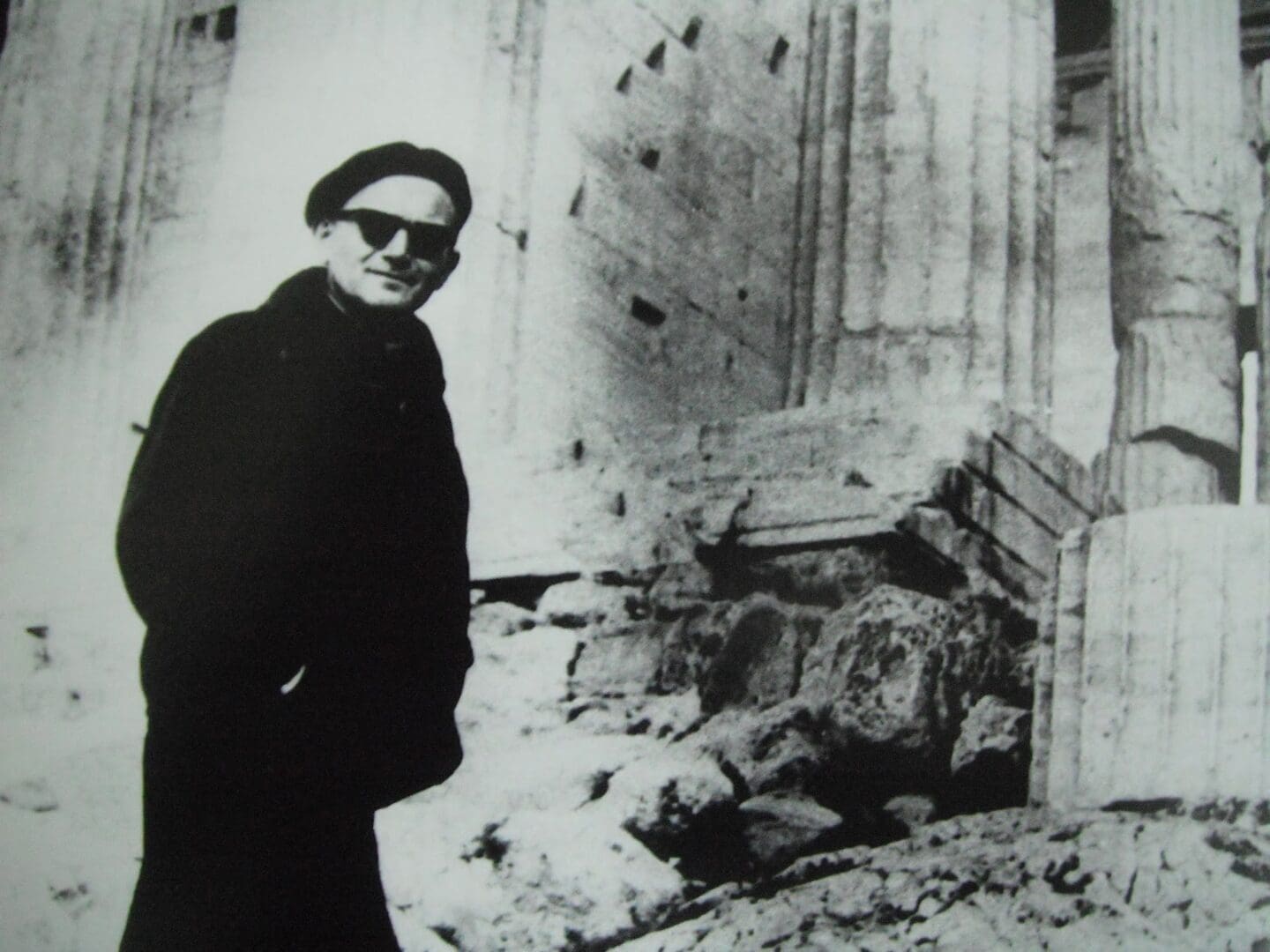
"The Jurisprudential Legacy of Pope John Paul II" (here).
"Pope John Paul II and the Law" (here).
Calendar of the Beatification (here).
"Remembering Pope John Paul II" (here).
"MOJ reflections of the first feast of St. John Paul II" (here).
"John Paul II and the Crisis of Modern Times" (here).


