More at Vox Nova. Check it out.
Tuesday, January 22, 2008
"Defiant Birth: Women Who Resist Medical Eugenics"
A Debate About the Morality of Abortion
[This from the Catholic News Agency, 1/22/08:]
Professors’ abortion debate attracts hundreds at University of Colorado
Professors’ abortion debate attracts hundreds at University of Colorado
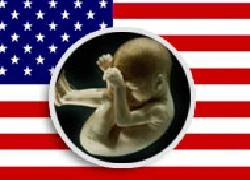
.- A Catholic-sponsored debate about the ethics of abortion packed hundreds into an auditorium on the University of Colorado campus in Boulder, CO this past Friday night. The debate featured two prominent philosophy professors—Drs. Peter Kreeft and David Boonin—who defended their views on the ethics of abortion.
Listeners filled all 288 seats of the auditorium, while others sat in the aisles. Still more sat in the overflow seating in the basement hallway, and even crowded the stairs leading up from the basement, a total audience easily surpassing 400 in number.
The debate, sponsored by the Thomas Aquinas Institute for Catholic Thought, addressed the question "Is abortion morally justifiable?" Dr. Peter Kreeft, of Boston College, answered that it could never be while Dr. David Boonin of the University of Colorado argued that abortion was sometimes a moral choice. Both professors offered many reasons and counterarguments defending their position.
The professors are both prominent in their field and in the public eye. Kreeft has authored more than 45 books dedicated to defending Christian beliefs and understanding suffering, morality, philosophy, life, and God. Dr. Boonin’s 2003 book “A Defense of Abortion” won an honorable mention from the American Philosophical Association. Boonin is also the chair of the University of Colorado's philosophy department.
Dr. Kreeft opened the discussion with an "intuitional" appeal, saying "more people in fact are convinced by seeing, by experiencing, than by arguing." He noted that people usually change their minds through personal relationships rather than through strictly rational analysis. He advised the audience to listen to the "inner shock" of conscience.
Shifting to an explicit rational argument, Kreeft took the position
that a human fetus is a person possessing many rights, including the
right to life. He also argued that people cannot rationally deny the
right to life of the unborn without denying the right to life of
newborns.
He recounted how he once discussed abortion with
"some very intelligent feminists," claiming that they had no argument
justifying abortion that would not also justify infanticide.
"After the argument they came up to me and said 'Congratulations, professor, you changed our minds. We didn't think you could do that.'"
"'Oh, good,' I said, 'you're pro-life now?'"
"'No, we're pro-infanticide'," Kreeft finished, prompting surprised laughter from the audience. "So logical consistency can be a two-edged sword," he noted.
Even someone who was unsure if an unborn child is a person, Kreeft argued, would in the absence of certainty have to refrain from having an abortion. To kill someone without knowing if they are human is still homicide. To act in a rash manner that could kill someone, such as poisonously fumigating a room without being sure it was empty of people, would amount to criminal negligence. Barring certain knowledge that an unborn human is not a person, abortion similarly would be blameworthy even if the human fetus were not a person with the right to life.
Dr. Boonin began his remarks with a general comment criticizing the belief that the only arguments against abortion are religious arguments. "In fact, there are a number of distinct arguments, potentially quite powerful arguments," against abortion that do not refer to God and rely on reasonable premises that people on both sides of the abortion debate would accept. He said Kreeft's opening remarks were examples of such reasoning.
Boonin then presented criticisms of some general pro-life arguments and raised some philosophical concerns about Kreeft's arguments. Boonin said that it was "implausible" to many people that human membership automatically entailed having the right to life. One such case is that of an individual whose capacity for consciousness is lost when most of his brain is physically destroyed.
Boonin suggested that Kreeft's argument that any moral uncertainty about moral status of the unborn child meant all abortions were at minimum morally blameworthy could have radical implications if applied consistently. This "appeal to uncertainty," as he called it, could require pacifism, vegetarianism, opposition to capital punishment, and the advocacy of a moral imperative to give all of one’s excess income to those in need.
Boonin went on to argue that "the right to life is not the right to be kept alive by somebody else." If all human beings shared the same right to life, abortion could be justified using this distinction. Proposing a thought experiment, Boonin suggested the audience imagine being kidnapped and forced to donate bone marrow.
"Suppose you walked out in the park yesterday and a doctor caught you and conked you on the head and knocked you unconscious. You wake up, and the doctor has hooked you up to a bone marrow extraction device. The bone marrow is extracted from you and pumped into me. You ask 'What's going on?' The doctor says 'Don't worry, stay hooked into Professor Boonin for the next nine months, he'll be fine. Disconnect yourself now, because of a bone marrow disease, he's going to die.'"
Most people, Boonin thought, would agree that in this case a person would not have a right to be kept alive. He argued the situation was analogous to abortion. "The fetus isn't just sitting in a lounge chair somewhere," he said, but is in the body of a woman who doesn't wish to be pregnant.
Closing the evening, Boonin thanked the Aquinas Institute for
hosting him. "There is something quite extraordinary about the fact
that the Aquinas Institute invited me to speak this weekend, giving me
equal time with a national representative of the views that obviously
they are passionately committed to."
Father Kevin Augustyn, pastor of St. Thomas Aquinas Parish, closed the meeting with a description of the lecture series’ aim.
"Reason can lead to the threshold of faith, and once across that threshold of faith, then reason still has a role for us to understand God's word and God's ways in our lives. The Aquinas Institute for Catholic Thought exists for that reason, for the search for truth."
Speaking to CNA at a post-debate reception, Father Augustyn further explained the institute’s goals.
“The Aquinas Institute for Catholic Thought is basically our arm for outreach to both Catholic students that come to us, and the university at large. We're trying to engage an important secular university with the Catholic faith. How do you do that? You begin with dialogue, and what we have in common, and we believe reason is on our side,” he said.
Many in attendance found the high turnout remarkable. The debate had been advertised in flyers, mailing lists, and in the diocesan paper and website. Social networks also spread the word. The event’s Facebook.com page on Sunday evening reported 96 confirmed guests and 48 who said they would possibly attend.
Seth James DeMoor, a University of Colorado senior studying history and education, estimated 600 people heard the debate.
“The room holds 300 people, and there were at least 300 people outside the room. This issue is the issue of the generation, and I think the proof is in the numbers. It just shows that this issue is at the forefront of American culture,” DeMoor said.
"Multitudes" lost
This striking graphic conveys, powerfully, what (or rather, who) has been lost since Roe v. Wade. (Be sure to scroll down to the end, and to click on the last blue dot.)
On this day in history . . .
Ed Whelan recalls:
For the second time in American history, the Supreme Court denies American citizens the authority to protect the basic rights of an entire class of human beings. In Roe v. Wade—the Dred Scott ruling of our age—Justice Blackmun’s majority opinion feigns not to “resolve the [purportedly] difficult question of when life begins,” but in fact rules illegitimate any legislative determination that unborn human beings are deserving of legal protection from abortion. Roe and Doe v. Bolton (decided the same day) impose on all Americans a radical regime of essentially unrestricted abortion throughout pregnancy, all the way (under the predominant reading of Doe) until birth.
Despite scathing criticism, including from supporters of abortion (see point 2 here), Roe’s lawless power grab continues to roil American politics by preventing Americans from working together, through an ongoing process of persuasion, to establish and revise abortion policies.
Promoting the Sanctity of Life and the Legacy of Dr. King
As we remember the life and prophetic witness for racial equality of Dr. Martin Luther King, and as we listen to the recent arguments in the presidential campaign about the role of Dr. King, it may be serendipitous that the 35th anniversary of Roe v. Wade comes only a day later.
Alveda King, the niece of Dr. King and a former member of the Georgia Legislature, is now a leading pro-life advocate. As she put in a talk to student at Valparaiso law school last September (more on her presentation here):
If her uncle were alive, he could not condone abortion, King said."He absolutely couldn't," she said. "How can the dream survive if we murder the children?"
Greg Sisk
Monday, January 21, 2008
Professor George on the Roe anniversary
Here:
The legal problem with Roe v. Wade is simple: The Supreme Court's decision to invalidate state laws prohibiting or restricting abortion lacks any basis in the text, logic, structure, or original understanding of the Constitution of the United States. The late John Hart Ely, a famous legal scholar who himself supported legal abortion as a matter of public policy, said that Roe v. Wade "is not constitutional law and gives almost no sense of an obligation to try to be." The justices who manufactured a right to abortion in Roe violated and dishonored the very Constitution they purported to interpret by substituting their own moral and political judgments for those of the elected representatives of the people. Their ruling was a gross usurpation by the judiciary of the authority vested by the Constitution in the people themselves, acting through the constitutionally prescribed institutions of republican democracy. As dissenting Justice Byron White put it, Roe was nothing more than an exercise of "raw judicial power." It was not merely an incorrect decision, but an anti-constitutional one.
Pope Benedict's planned speech at La Sapienza University
Pope Benedict was scheduled to deliver a speech at La Sapienza University in Rome at the beginning of the academic year. In the face of a planned protest, the Vatican cancelled the speech because of a lack of the "prerequisites for a dignified and tranquil welcome." The speech the Pope had planned to deliver has been released. Here is a link. The speech, a follow-up to the Pope's Regensburg address, is quite interesting. In the course of the speech, Benedict discusses Rawls and Habermas.
The speech is marked by Benedict's characteristic humility. His main emphasis is on the importance of the university in the pursuit of truth. He mentions the danger that reason --"if it wants only to construct itself on the basis of the circle of its own arguments and that which convinces it at the moment--worried about its secularity--...will cut itself off from the roots by which it lives; then it will not become more reasonable and more pure, but it will break apart and disintegrate."
He closes with a mention of how he sees his role as Pope--"to continaully invite reason to seek out the true, the good, God, and on this path, to urge it to glimpse the helpful lights that shine forth in the history of the Christian faith, and in this way to perceive Jesus Christ as the Light that illuminates history and helps us to find the way to the future." It's a pity that Benedict was not welcomed to deliver this message in person.
Richard M.
UNJUST WAR
Sightings 1/21/08
Unjust War
-- Martin E. Marty
A Stupid, Unjust, and Criminal War: Iraq 2001-2007 by priest, sociologist, novelist, and columnist Andrew Greeley is a collection of 121 columns dating back to 2001, in their original form. As the title suggests, the columns are not long on nuance. They have going for them guts, consistency, a readiness to use the language of the prophets and the Church, prescience, and not a little hold on truth in reporting. Columnists who once supported the war and others who were critical all along can profitably compare notes with Greeley .
The Chicago priest, who has a passion for Catholicism, is dispassionate enough to have a lover's quarrel with the Church, and is impassioned about bringing church teaching on wisdom (as opposed to "stupidity"), just war theory (as opposed to "unjustness"), and law-abidingness (as opposed to "criminality") to bear on events of this long, long war. He celebrates what the popes of these years, Vatican spokespersons, and many bishops have had to say for peace and against capital punishment, nuclear armament, war-making in general, and this war in particular. At the same time he mourns that so little of what they said reached the Catholic faithful. And he is scornful of most religious leaders who were cowed into silence for fear of sounding unpatriotic when they might have been helpfully vocal in criticism of governmental and military policy. In a world where many were snookered into blandness or silence, he remains unsnookered.
The Martys compare opinions as we read four daily papers. We come to most agreement on wartime issues when we read Greeley 's syndicated columns in the Chicago Sun-Times. From before the first gun was fired, he stopped just short of charging that we were being led into the war by leaders who, too often, wanted war but didn't count the cost. Now uncontroversial are his once contentious early comments on how unprepared the U.S. administration and military were before they invaded Iraq. Greeley is no pacifist, and recognizes, for example, the "necessity" of World War II and the valor of those who supported the Allied cause. He is not naïve about the scope of the threat of militant Muslims and terrorists, but was suspicious of those Americans who immediately after 9/11 labeled all forms of action and reaction a "War" on terror.
I do not picture that most readers
of Sightings will read this book, either because they do not welcome
priestly comment and criticism or because they have been reading the columns all
along, usually affirming them, and don't need a repeat. Nor can I
quote enough from these pages to document how true to conditions and prospects
Greeley has been. Instead I
want to pass on something that crossed my mind while reading him, as
follows: Pastors, priests, professors, nuns, teachers,
editorialists, and other leaders were consistently told back during the Vietnam
War that they lacked expertise to analyze what only some military and
governmental leaders, setting out to monopolize comment, knew enough about.
We hear the same now on issues dealing with the environment, the
global economy, and more. It becomes clear once again that
biblically informed, theologically inspired criticism and proposals can come
from highly fallible people who, like everyone else, do not "know enough," but
who do "know enough" from another angle, to make their own contributions to
conversations that remain urgent. Folks like Greeley have the satisfaction of seeing
that their prophecies have been confirmed, but take small comfort in that.
----------
Sightings comes from the Martin Marty Center at the University of Chicago Divinity School.
Interesting Subject Matter
| The Catholic Scare: How Anti-Catholic Prejudice Shaped Brown v. Board |
|
GLENNA GOLDIS New York University School of Law January 11, 2008 |
Abstract:
This essay examines supreme court justice Hugo
L. Black and his times, focusing on the evolving relationship between the
Catholic Church and the legal elite. Part II introduces the compulsory public
school movement of the 1920s. Part III describes Black's career prior to the
Supreme Court, including his membership in the Ku Klux Klan. Contrary to what
Black would later claim, politics did not require him to join the Ku Klux Klan.
Part IV introduces the Roosevelt Court of the 1940s and the race and religion
politics of that era. This section also analyzes Black's majority opinion in
Everson, arguing that he voted with the pro-Catholic side in order to bait the
dissenters into agreeing with anti-Catholic logic. Part V recounts education
debates of the 1950s and shows that progressive elites routinely slurred
parochial schooling as segregation. They professed the ideal of one school
system for all children¿black and white, Protestant and Catholic. A textual
analysis of three related school desegregation cases shows that Black tried to
use them to advance the reincarnated compulsory public education movement. Part
VI concludes that Black had a tremendous impact on law and none on society.
Suggested Citation
Goldis, Glenna, "The Catholic Scare: How Anti-Catholic Prejudice
Shaped Brown v. Board" (January 11, 2008). Available at SSRN: http://ssrn.com/abstract=1084764
He Had a Dream
Today is the federal holiday honoring the Rev. Dr. Martin Luther King, who preached that "we must all learn to live together as brothers or we shall perish together as fools." If you get a chance sometime during the day, listen to his I Have a Dream speech or the I have Been to the Mountaintop speech that he gave the day before his assassination.
Recent Posts
Categories
Monthly Archive
StatCounter
PageViews
Since February 19, 2008
