Story here. This and many similar stories provide -- and must be seen as providing -- a heavy dose of cold water on the enthusiasms of those who imagine that, because China is growing economically and getting richer, it is becoming less of a massive human-rights violator. Universities, in particular, should resist, in principle, the temptation to avert their institutional eyes from these violations and from the realities about the authorities in the PRC.
Wednesday, October 21, 2015
Chinese bishop dies in prison, after years of detention and forced labor
Monday, October 19, 2015
A must-read: "Free to Serve: Protecting the Religious Freedom of Faith-Based Organizations"
More here, on the valuable and important new book by Stephen Monsma and Stanley Carlson-Thies. From the blurbage:
What do Hobby Lobby, InterVarsity Christian Fellowship, Wheaton College, World Vision, the Little Sisters of the Poor, and the University of Notre Dame have in common?

All are faith-based organizations that have faced pressure to act in ways contrary to their religious beliefs.
In this book, two policy experts show how faith-based groups--those active in the educational, healthcare, international aid and development, and social service fields--can defend their ability to follow their religiously based beliefs without having to jettison the very faith and faith-based practices that led them to provide services to those in need.
They present a pluralist vision for religious freedom for faith-based organizations of all religious traditions. The book includes case studies that document the challenges faith-based organizations face to freely follow the practices of their religious traditions and analyzes these threats as originating in a common, yet erroneous, set of assumptions and attitudes prevalent in American society.
The book also includes responses by diverse voices--an Orthodox Jew, a Roman Catholic, two evangelicals, two Islamic leaders, and an unbeliever who is a religious-freedom advocate--underscoring the importance of religious freedom for faith-based organizations.
Friday, October 16, 2015
Saint John Paul II . . . on a mission from God
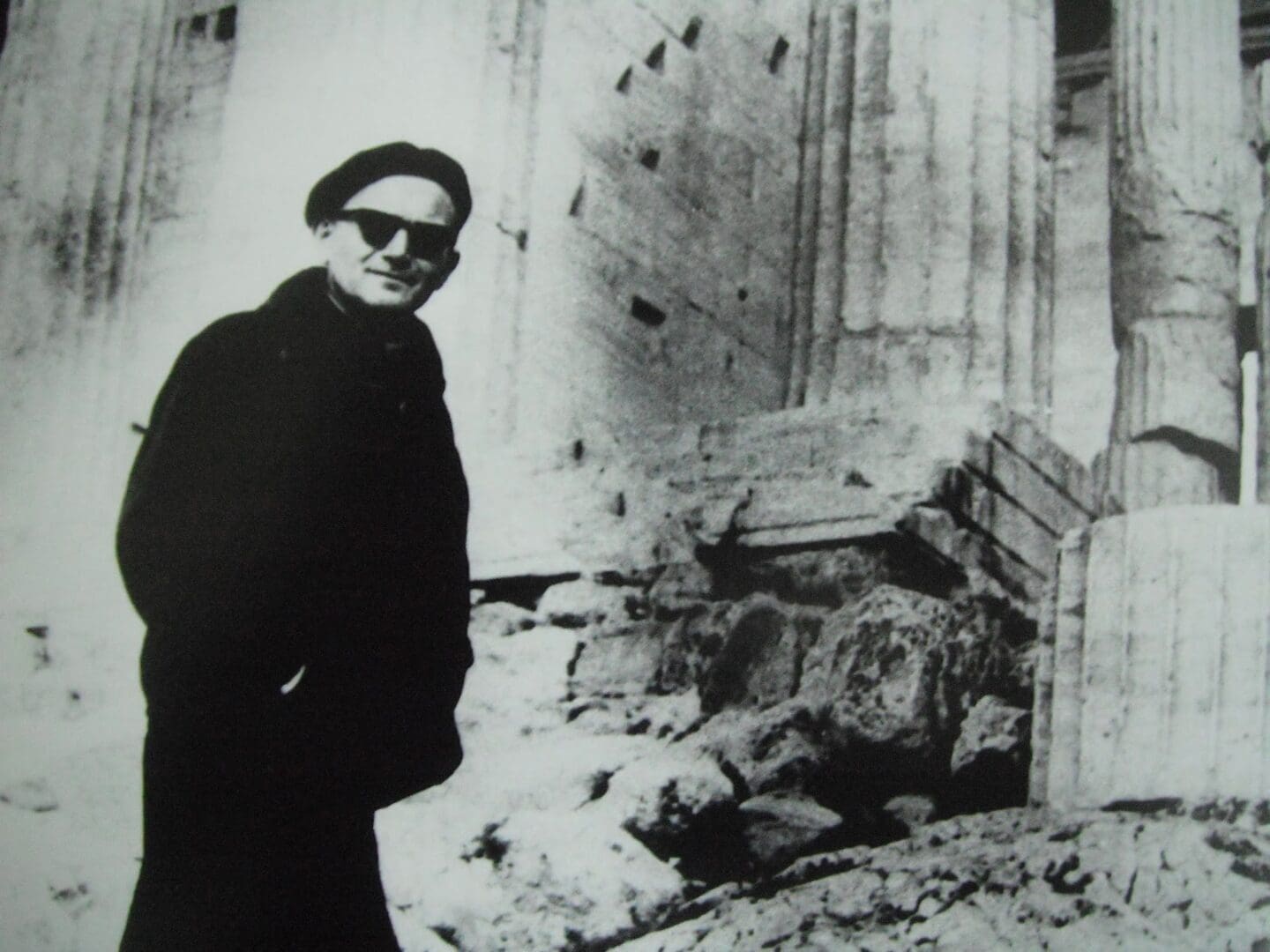
Some Pope Saint John Paul II posts
"The Jurisprudential Legacy of Pope John Paul II" (here).
"Pope John Paul II and the Law" (here).
Calendar of the Beatification (here).
"Remembering Pope John Paul II" (here).
"MOJ reflections of the first feast of St. John Paul II" (here).
"John Paul II and the Crisis of Modern Times" (here).
On this day . . . Pope John Paul II

Wednesday, October 14, 2015
More on the APP Statement Calling for Constitutional Resistance
Thanks to Kevin for calling attention to the Statement Calling for Constitutional Resistance to Obergefell. I've been thinking a lot about it myself, and am still working on formulating my thoughts. For now, MOJ readers might be interested in this post, from Prawfsblawg, by Howard Wasserman, in which he (correctly, I think) takes issue with Lyle Denniston's contention that signing such a Statement could violate a lawyer's ethical obligation to show appropriate "respect for precedent." As Howard explains, it "cannot be right" that "a lawyer can be sanctioned for arguing that a court disregard or overturn even binding precedent" or, for that matter, that a lawyer argue that a precedent was wrongly decided and therefore ought not to control in a different case.
The Missionaries of Charity to end adoption work in India
The story is here:
The nuns decided on this voluntarily after the Missionaries of Charity headquarters in Kolkata was informed about complying with the new Guidelines Governing Adoption of Children by the federal Ministry of Women and Child Development, said an Oct. 10 statement issued by Sunita Kumar, spokeswoman for the congregation.
"If we were to continue the work set up by Mother Teresa, complying (with) all the provisions would have been difficult for us," the statement said.
As MOJ readers know, there have been similar decisions made, here in the United States, by some faith-based adoption agencies after authorities insisted that the agencies not discriminate against same-sex couples in the placement of children.
When the President welcomed the Pope at the White House, he said:
. . . From my time working in impoverished neighborhoods with the Catholic Church in Chicago, to my travels as President, I’ve seen firsthand how, every single day, Catholic communities, priests, nuns, laity are feeding the hungry, healing the sick, sheltering the homeless, educating our children, and fortifying the faith that sustains so many.
And what is true in America is true around the world. From the busy streets of Buenos Aires to the remote villages in Kenya, Catholic organizations serve the poor, minister to prisoners, build schools, build homes, operate orphanages and hospitals. And just as the Church has stood with those struggling to break the chains of poverty, the Church so often has given voice and hope to those seeking to break the chains of violence and oppression. . . .
We should hope that policymakers who appreciate all the good work the President describes will resist calls to impose conditions and regulations on religious social-welfare institutions that prevent them from continuing that work with integrity.
Monday, October 12, 2015
Helen Alvare on Marriage as the "new property"
Helen Alvare has posted a new paper on the idea of marriage as the "new property" (i.e., as something that comes "down from the state" as opposed to being pre-political. Here's the abstract:
Prior to the Supreme Court’s 5-4 decision in Obergefell v. Hodges creating a constitutional right to same-sex marriage, it was nearly universally acknowledged that the state did not have constitutive authority over human marriage, which was “up from nature” rather than “down from the state.” In other words, the nature of marriage was determined by pre-given qualities of human, opposite-sexed pairs and the organic qualities and consequences of their union. Post-Obergefell, however, even marriage has become a form of “new property”: a state-determined status, entitling recipients to various rights and benefits. Relying upon classic texts by Professors Robert Reich and Mary Ann Glendon regarding the rise of government and the decline of families as guarantors of security for American citizens, this article investigates the implications of marriage as “the new property” for the quality and stability of marriage and the future of children.
Friday, October 9, 2015
A festschrift for Fr. Araujo! Call for Papers
I am very pleased to announce a project being headed up by Stefanus Hendrianto, S.J. (who is a colleague of mine this year at Notre Dame):
Dear colleagues, friends, and students of Father Bob Araujo,
In the last twenty years of his active ministry, in Spokane, Rome, New York, Boston and Chicago, Rev. Robert John Araujo, S.J., has been a faithful priest, a prolific scholar, an exemplary teacher, a caring colleague and a dear friend to all of us.
In honouring Father Araujo’s life, his service to the Church and his great dedication to legal academia, we would like to invite you to contribute a chapter to a volume, which we are planning to place in 2016.
The book will include five areas of academic interest of Father Araujo: Natural Law & Legal Philosophy, Religious Freedom, Public International Law, Catholic Social Teaching, and Legal Education. Our wish is to incorporate writings by his colleagues, friends and students, primarily in those areas of study (though not exclusively). We are hoping to make this volume as an opportunity for all of us to get together to continue working on issues that are important to humanity, the Church, the world.
If you are interested in this venture, as we hope you are, please take note of the following:
- The facilitator of this project is Stefanus Hendrianto, S.J., a Jesuit Scholastic from Oregon Province, with support of Rick Garnett of the University of Notre Dame Law School and John Breen of Loyola University Chicago Law School.
- An initial agreement should be submitted to the facilitator of the volume by email ([email protected]) by October 19, 2015, the feast of North American Martyrs.
- An abstract of 150-200 words should be submitted to the facilitator by email ([email protected]) preferably on the birthday of Father Araujo, October 30th, 2015. Abstracts should feature the working title of the proposed chapter and the details of the corresponding author.
- Prospective contributors are encouraged to write a chapter specifically for the volume. Nevertheless, it is also possible to draw on already published work, adapting this to address the volume theme. Copyright clearance for work that has already been published is entirely the responsibility of the contributing authors, and evidence of such clearance may be required by the publishers when we submit the final draft of the volume.
- The first draft of the chapter is to reach the facilitator by March 12, 2016, on the feast of the canonization of St. Ignatius of Loyola and St. Francis Xavier. Language editing is the responsibility of the authors.
- We will be aiming to have a gathering of the contributors from different part of the country to discuss their work on March 28, 2016 (on the anniversary of the final vow of Fr. Bob Araujo). But this gathering is contingent upon our ability to solicit funding for this project.
- The final draft will need to by April 22 2016 - the feast of Mary, Mother of the Society of Jesus- for onward transmission to the publishers.
Time to pre-order "The Rise of Corporate Religious Liberty"!
This book, "The Rise of Corporate Religious Liberty" -- to which I contributed this chapter on "The Freedom of the Church" -- can be preordered (in paperback, even!) now! "Run, don't walk . . ."
The book was edited with heroic patience (toward me) by Micah Schwartzman, Zoe Robinson, and Chad Flanders. The contributors include Sarah Barringer Gordon, Paul Horwitz, Nelson Tebbe,Douglas Laycock, Christopher C Lund, Liz Sepper, Frederick Gedicks, Ira Lupu, Robert Tuttle, Robin West, Jessie Hill, Mark Tushnet.
Here is the abstract for my chapter:
This chapter is part of a collection that reflects the increased interest in, and attention to, the corporate, communal, and institutional dimensions of religious freedom. In addition to summarizing and re-stating claims made by the author in earlier work – claims having to do with, among other things, church-state separation, the no-establishment rule, legal and social pluralism, and the structural role played by religious and other institutions – the Article responds to several leading lines of criticism and attempts to strengthen the argument that the idea of “the freedom of the church” (or something like it) is not a relic or anachronism but instead remains a crucial component of any plausible and attractive account of religious freedom under and through constitutionally limited government. It also includes suggestions for some workable and – it is hoped – faithful translations of it for use in present-day cases, doctrine, and conversations.
The Article’s proposal is that “the freedom of the church” is still-important, even if very old, idea. It is not entirely out of place – even if it does not seem to fit neatly – in today’s constitutional-law and law-and-religion conversations. If it can be retrieved and translated, then it should, not out of nostalgia or reaction, but so that the law will better identify and protect the things that matter.
Recent Posts
Categories
Monthly Archive
StatCounter
PageViews
Since February 19, 2008
