From the "better late than never" file: Keith Pavlischek has this post, over at First Things, asking whether it "violates the First Amendment" to "oppos[e] radical Islam". He writes:
Since the Islamists believe they are permitted, indeed obliged, by their canonical religious texts to use terrorism to advance their agenda, you would think that it would be in the national interest of the United States that “moderate Islam” prevails in this internal struggle. In fact, as just about any expert will tell you, the primary goal of public diplomacy efforts should be to separate the jihadists from the broader non-jihadist Muslim population. To put it crudely, we want one side of this controversy within Islam to win and another to lose.
But that creates a problem because if, as a matter of public policy, we want the moderate (non-Islamist) side to win we would be promoting with public money one religion (moderate Islam) over another (radical Islamism). But if we promote one religion over another we have, according to some of our more brilliant Constitutional scholars, violated the First Amendment’s prohibition on laws respecting the Establishment of religion.
Similar issues and questions have come up in the domestic context. For example, some "Safe Space" training materials, used at Georgia Tech, tried to help gays and lesbians feel more safe and comfortable on campus by -- in Eugene Volokh's words -- "taking stands on quintessentially theological questions -- e.g., the true meaning of the Bible, and the 'legitimacy' of various interpretations of 'Biblical texts.'"
Does the government have any interest in what Justice Brennan called "the development of doctrine"? Or is it, again quoting the Justice, a "matter[] of purely ecclesiastical concern"? As I see it -- for (a lot) more, see this paper -- the answer is tricky. One the one hand, we should not be surprised if and when the government tries to push religious doctrine in ways that are more congenial to the government's understanding of the public good or public interest. We would be kidding ourselves if we thought that a government could ever really be "neutral" with respect to what citizens believe and in what moral traditions they are formed. That this is true, though, does not mean we (who value religious freedom) should not worry about the implications of this fact:
[F]ar from being a "purely ecclesiastical concern," the content of religious doctrine and the trajectory of its development are matters to which even a secular, liberal, and democratic government will almost certainly attend. It is not the case that governments like ours are or can be "neutral" with respect to religion's claims and content. [T]he content, meaning, and implications of religious doctrine are and have long been the subjects of government power and policy. Secular, liberal, democratic governments like ours not only take cognizance of, but also and in many ways seek to assimilate - that is, to transform - religion and religious teaching. And, it is precisely because such governments do have an interest in the content, and, therefore, in the "development," of religious doctrine - an interest that they will, if permitted, quite understandably pursue - that authentic religious freedom is so fragile.
Friday, September 18, 2009
Give it a read, if you haven't recently. There's some good stuff in there:
We the people of the United States, in order to form a more perfect union, establish justice, insure domestic tranquility, provide for the common defense, promote the general welfare, and secure the blessings of liberty to ourselves and our posterity, do ordain and establish this Constitution for the United States of America. . . .
Thursday, September 17, 2009
Because my friend Michael likes to have fun tweaking me, by pretending that my thinking and action when it comes to policy and politics is shaped by a loyalty to "Republicans," or an aversion to "Democrats" (he knows this isn't the case, of course; he's just playing around), he asks, here, whether I'm "ready to join the Democrats on this one [i.e., the "Catholic take on the health-care debate], at least?"
I am, of course, happy to "join the Democrats" on any one that they get right. (For example, given my work and activism in opposition to the death penalty, I would be delighted if the Democrats -- who have commanding majorities in both houses -- showed a little backbone and abolished the federal death penalty. Given my commitment to educational opportunity for the poor, I would be delighted if the Democrats abandoned their hostility to school choice.) But, Michael's question is the wrong one. The right question is, "are the Democrats ready to join the Church on this one", i.e., on the basic propositions that the law ought to protect vulnerable human beings from private violence and, at the very least, that health-care "reform" should not involve public funding of the destruction of such persons or burdens on those who refuse to participate in such destruction. So far, it seems, they are not. Too bad.
Wednesday, September 16, 2009
MOJ bloggers and readers are, no doubt, familiar with the work of Prof. Russ Hittinger. I've learned that Russ has recently been named to the Pontifical Academy of Social Sciences, the aim of which is
to promote the study and the progress of the social sciences, primarily economics, sociology, law and political science. The Academy, through an appropriate dialogue, thus offers the Church the elements which she can use in the development of her social doctrine, and reflects on the application of that doctrine in contemporary society.
Congratulations, Russ!
Sunday, September 13, 2009
I suppose I should not be surprised that the newest member of the MOJ community,
Prof. Robert George (Politics / Princeton), put up
his inaugural post before I could put up the "welcome" post. In any event, welcome aboard, Robby!
Friday, September 11, 2009
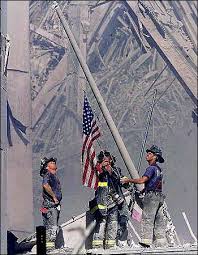
Here is the prayer offered by Pope Benedict during his visit to Ground Zero:
O God of love, compassion, and healing,
look on us, people of many different faiths and traditions,
who gather today at this site,
the scene of incredible violence and pain.
We ask you in your goodness
to give eternal light and peace
to all who died here --
the heroic first-responders:
our fire fighters, police officers,
emergency service workers, and Port Authority personnel,
along with all the innocent men and women
who were victims of this tragedy
simply because their work or service
brought them here on September 11, 2001.
We ask you, in your compassion
to bring healing to those
who, because of their presence here that day,
suffer from injuries and illness.
Heal, too, the pain of still-grieving families
and all who lost loved ones in this tragedy.
Give them strength to continue their lives with courage and hope.
We are mindful as well
of those who suffered death, injury, and loss
on the same day at the Pentagon and in Shanksville, Pennsylvania.
Our hearts are one with theirs
as our prayer embraces their pain and suffering.
God of peace, bring your peace to our violent world:
peace in the hearts of all men and women
and peace among the nations of the earth.
Turn to your way of love
those whose hearts and minds
are consumed with hatred.
God of understanding,
overwhelmed by the magnitude of this tragedy,
we seek your light and guidance
as we confront such terrible events.
Grant that those whose lives were spared
may live so that the lives lost here
may not have been lost in vain.
Comfort and console us,
strengthen us in hope,
and give us the wisdom and courage
to work tirelessly for a world
where true peace and love reign
among nations and in the hearts of all.

Thursday, September 10, 2009
I blogged a few days ago about (what I think is) a disturbing family-law opinion, written by a judge in New Hampshire. Bill McGurn has an interesting op-ed, here, about the case, and also about a case in Florida, in which a state court is "considering what to do with 17-year-old Rifqa Bary. Miss Bary fled to Florida from Ohio a few weeks back, where she sought refuge with a Christian couple whose church she had learned about on Facebook. She says she ran away from home because her father discovered she'd become a Christian—and then threatened to kill her. On Thursday, Circuit Judge Daniel Dawson ordered the girl and her family to try mediation and set a pretrial hearing for the end of the month."
I read a few things in which it was suggested that a consistent commitment to religious liberty and parents' rights required those who were troubled by the New Hampshire decision -- or, more precisely, its reasoning -- to side with Rifqa Bary's father. I don't see it (assuming, for present purposes, that Ms. Bary is telling the truth about her father's threat). It is not the business of the public authority to override a fit parent's decisions about religious education; it is the business of the public authority to protect children from potentially lethal violence by angry parents. Thoughts?
UPDATE: My colleague Cathy Kaveny has a different view of the New Hampshire case. In response to her post, I wrote, in the comments:
As Cathy and I discussed, it is clearly the case that the context of the court's opinion -- that is, a dispute regarding custody arrangements -- complicates matters. In this context, courts often have to make decisions about matters that, as a general matter, are probably not courts' business. What is (to me) troubling about the court's decision is the fact that the court concedes that the child is being educated in accord with the relevant standards and that the mother is a fit parent, but nonetheless endorses the conclusion that "the daughter would be best served by exposure to different points of view at a time in her life when she must begin to critically evaluate multiple systems of belief and behavior and cooperation in order to select, as a young adult, which of those systems will best suit her own needs." To me -- and again, I agree with Cathy that the familial-dispute context complicates matters -- this line of reasoning is worrisome, and in tension with religious liberty, even if it were operating merely as a default theory of education. (There is also the different question whether this default theory of education really is attractive, on the merits.)
Wednesday, September 9, 2009
Steve's post on "God's politics" is, I think, very insightful. I agree that it is a mistake to imagine that "God is neither a liberal or a conservative" if by that one means "God is indifferent to the results and practice of politics." That said, there *is* a truth in the bumper-sticker bromide, namely, that the parties that are denoted by terms like "Republican" and "Democrat" and "liberal" and "conservative" (etc. etc.) do not profess or practice perfectly (or anything close to perfectly) "God's politics." Another truth that, I think, the slogan might capture, or at least gesture toward, is that many of the questions over which this world's political parties divide are not questions to which the "God's politics" answer is, or ever could be, clear or obvious to all faithful, reasonable people.
We all pick -- at least, I think we should -- our politics based on our best, well informed, conscientious, other-regarding judgment about the best means to promote human dignity and flourishing. And, if we are Christians, I suppose we have to think that God desires the promotion of human dignity and flourishing. So, we are all trying to pick our politics in a way that points the arrow of politics in the general direction of God's desire. We probably should never imagine, though, that we are (or that our politics ever could be) dead-on.


