Friday, October 16, 2015
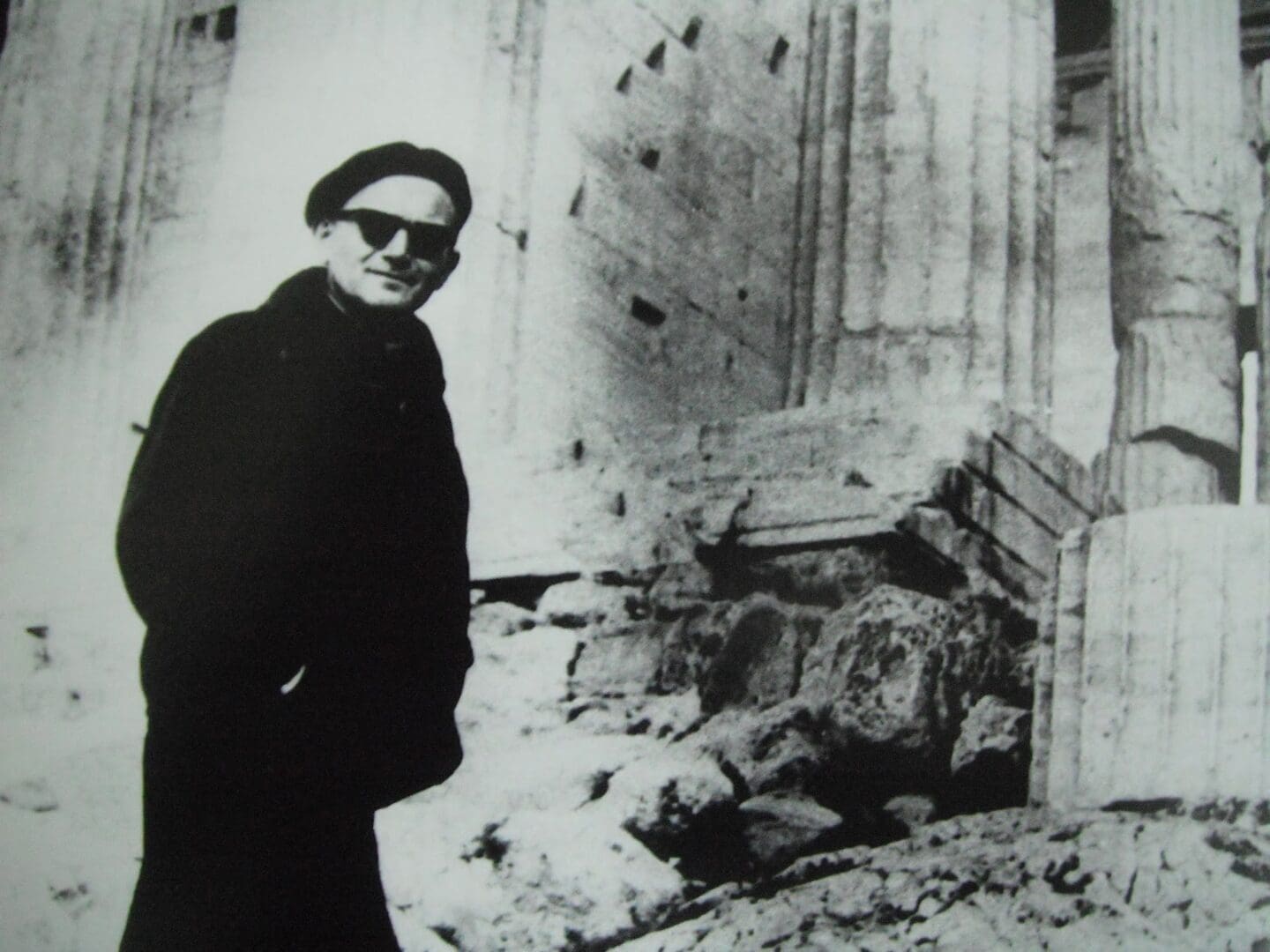
Saint John Paul II . . . on a mission from God
DC School Choice Program: A "Weird [Although Bipartisan!] Obsession"?
Here's a piece, informative but with biased snark, from the Washington Post (generally fairer on these things in its news columns) about how some congressional Democrats are joining Republicans in resisting the D.C. Council's push to end the voucher program. As a previous Post story put it:
Sen. Ron Johnson (R-Wis.) said in a statement that private school vouchers are needed because the D.C. public school system, “often cited as one of the worst in the country, is absolutely failing these children.” He was joined by Sens. Dianne Feinstein (D-Calif.), Tim Scott (R-S.C.) and Cory Booker (D-N.J.)
As usual, the political battle is being fought mostly over whether school choice is helpful to educational performance. Behind it, however, are the questions whether parents should be able to receive K-12 educational benefits even when they choose a religiously grounded education for their children--and whether participating schools should have to follow all the nondiscrimination requirements applicable to public schools.
Some Pope Saint John Paul II posts
"The Jurisprudential Legacy of Pope John Paul II" (here).
"Pope John Paul II and the Law" (here).
Calendar of the Beatification (here).
"Remembering Pope John Paul II" (here).
"MOJ reflections of the first feast of St. John Paul II" (here).
"John Paul II and the Crisis of Modern Times" (here).
On this day . . . Pope John Paul II

Thursday, October 15, 2015
Man in same-sex marriage removed as executive director of Catholic ministry in Richmond
A Richmond, Virginia man married to another man since 2008 was removed from his job as executive director of a Catholic ministry for low-income elderly this past April. John Murphy worked eight days as executive director for St. Francis Home before losing his job.
According to a news report, "two deputies of Bishop Francis Xavier DiLorenzo told him that he was being fired because his marriage goes against church doctrine."
In an interview with a local news outlet, Mr. Murphy said that his removal from the executive director position at St. Francis Home "was something that was out of left field and totally shocking to me."
According to a story at GayRVA.com, Mr. Murphy had "a little misgiving" during the hiring process when he found out that the nonprofit job he was interviewing for would be "heading up a care facility for low income elderly Richmonders run by the Catholic Diocese of Richmond." A Notre Dame graduate who was raised Catholic and attends church semi-regularly, Mr. Murphy nonetheless went ahead in the process after reportedly being reassured that the board "really wanted [Murphy] to focus on [fundraising and related] kinds of things and less on the religious aspect of it."
Murphy has filed a charge with the EEOC. A statement by the diocese says that, "[a]s a Catholic organization, we expect the employees of the Diocese and its ministries, to uphold and embody the consistent values and truths of the Catholic faith, including those preserving the sanctity of marriage."
If this ends up in federal court, Mr. Murphy will need to plead a prima facie case of discrimination and also overcome Title VII's religious employer exemption. Both will be difficult. Title VII does not encompass sexual orientation discrimination except to the extent that it can be classified as sex discrimination, and discrimination on the basis of being in a marriage that goes against church doctrine is not sexual orientation discrimination even if that were covered.
If Murphy can somehow shoehorn the facts of his claim into discrimination on the basis of sex, the religious employer exemption will also be invoked by the diocese. A news story on Murphy's charge reports that Michigan law professor Sam Bagenstos described the exemption as one that "goes only so far as to allow organizations from refusing to hire people who aren’t part of their religion." But Missouri law professor Carl Esbeck asserts that the Title VII exemption allows religious employers to enforce religiously based codes of conduct, because the operative understanding of religion "is not narrowly doctrinal or creedal but reaches beyond worship and denominations." Esbeck cites multiple cases applying the exemption to shield decisions based on religious codes of conduct. See also Stanley Carlson-Thies; but see Marty Lederman & Rose Saxe. (The Esbeck, Carlson-Thies, Lederman, and Saxe analyses are all more directly about the recent executive order, but the authorities they rely on relate to the Title VII exemption.) Other sources of law that may also be relevant are RFRA (depending on how Title VII would otherwise be applied) and the ministerial exception (depending on the facts).
Legal analysis aside, the facts as reported paint a picture of a broken hiring process for this position. One can imagine a situation in which the removal of someone already on the job for something that was known about the person's marriage at the time of hiring is less easily avoided--say, because there has been a leadership change in the diocese. But the reported facts point more toward a process breakdown. The recruiter or the board or both were not aligned with the diocese.
Perhaps facts will come out that tell a different story; only one side is telling its story right now, and it is coming out through advocates and the press. It would be surprising if nobody thought to verify diocesan policy on a matter like this. But if Mr. Murphy had received credible, authoritative, explicit assurances sufficient to overcome his misgiving about how his same-sex marriage might disqualify him for the position, then he deserves an apology. That is, of course, separate from the legal merits, which are unlikely to go in Mr. Murphy's favor. As long as litigation looms, moreover, it is likely that the parties will only be talking through their lawyers and media representatives.
Judicial departmentalism and collapse into judicial supremacy
Howard Wasserman finds the term "judicial departmentalism" useful for describing what might also be called bounded judicial supremacy. He says, though, that "judicial departmentalism inevitably morphs into judicial supremacy," and the mechanism is easy to identify. Suppose that non-judicial officials try to follow some approach other than judicial supremacy. They will soon face difficulty. Just about any question of constitutional meaning can be brought within the judicial domain. Once in that domain, the principles promulgated in precedents of the Supreme Court will control. And so we end up with a form of judicial supremacy, but only after time, expense, and strife.
This arrangement of bounded judicial supremacy nonetheless remains different from standard judicial supremacy. On the standard understanding of judicial supremacy, Supreme Court decisions about constitutional meaning control directly for everyone by virtue of being Supreme Court decisions, rather than controlling only indirectly through repetitive litigation governed by vertical stare decisis.
There might not be much practical difference between these two approaches most of the time. But a Supreme Court that operates with a judicial departmentalist mindset may approach matters differently than one that operates with a judicial supremacist mindset. Additionally, the judicial departmentalist framework highlights the legal contestability of the Court's pronouncements within the judicial domain as well as the notion that the judicial domain has boundaries around it.
Justice Story (and Montesquieu) on "the People of the North and the People of the South"
On another errand, I came across this wonderful tract from Justice Story's Commentaries on the Constitution (section 1867) concerning religion and the First Amendment, and in particular religion's relationship to republican government. I wonder (as, of course, a person of the south ostensibly living among people of the north): are we, as a nation today, more like the people of the north or of the south?
Indeed, in a republic, there would seem to be a peculiar propriety in viewing the Christian religion, as the great basis, on which it must rest for its support and permanence, if it be, what it has ever been deemed by its truest friends to be, the religion of liberty. Montesquieu has remarked, that the Christian religion is a stranger to mere despotic power. The mildness so frequently recommended in the gospel is incompatible with the despotic rage, with which a prince punishes his subjects, and exercises himself in cruelty. He has gone even further, and affirmed, that the Protestant religion is far more congenial with the spirit of political freedom, than the Catholic. "When," says he, "the Christian religion, two centuries ago, became unhappily, divided into Catholic and Protestant, the people of the north embraced the Protestant, and those of the south still adhered to the Catholic. The reason is plain. The people of the north have, and will ever have, a spirit of liberty and independence, which the people of the south have not. And, therefore, a religion, which has no visible head, is more agreeable to the independency of climate, than that, which has one." Without stopping to inquire, whether this remark be well founded, it is certainly true, that the parent country has acted upon it with a severe and vigilant zeal; and in most of the colonies the same rigid jealousy has been maintained almost down to our own times.
Wednesday, October 14, 2015
More on the APP Statement Calling for Constitutional Resistance
Thanks to Kevin for calling attention to the Statement Calling for Constitutional Resistance to Obergefell. I've been thinking a lot about it myself, and am still working on formulating my thoughts. For now, MOJ readers might be interested in this post, from Prawfsblawg, by Howard Wasserman, in which he (correctly, I think) takes issue with Lyle Denniston's contention that signing such a Statement could violate a lawyer's ethical obligation to show appropriate "respect for precedent." As Howard explains, it "cannot be right" that "a lawyer can be sanctioned for arguing that a court disregard or overturn even binding precedent" or, for that matter, that a lawyer argue that a precedent was wrongly decided and therefore ought not to control in a different case.
The Missionaries of Charity to end adoption work in India
The story is here:
The nuns decided on this voluntarily after the Missionaries of Charity headquarters in Kolkata was informed about complying with the new Guidelines Governing Adoption of Children by the federal Ministry of Women and Child Development, said an Oct. 10 statement issued by Sunita Kumar, spokeswoman for the congregation.
"If we were to continue the work set up by Mother Teresa, complying (with) all the provisions would have been difficult for us," the statement said.
As MOJ readers know, there have been similar decisions made, here in the United States, by some faith-based adoption agencies after authorities insisted that the agencies not discriminate against same-sex couples in the placement of children.
When the President welcomed the Pope at the White House, he said:
. . . From my time working in impoverished neighborhoods with the Catholic Church in Chicago, to my travels as President, I’ve seen firsthand how, every single day, Catholic communities, priests, nuns, laity are feeding the hungry, healing the sick, sheltering the homeless, educating our children, and fortifying the faith that sustains so many.
And what is true in America is true around the world. From the busy streets of Buenos Aires to the remote villages in Kenya, Catholic organizations serve the poor, minister to prisoners, build schools, build homes, operate orphanages and hospitals. And just as the Church has stood with those struggling to break the chains of poverty, the Church so often has given voice and hope to those seeking to break the chains of violence and oppression. . . .
We should hope that policymakers who appreciate all the good work the President describes will resist calls to impose conditions and regulations on religious social-welfare institutions that prevent them from continuing that work with integrity.
Monday, October 12, 2015
Helen Alvare on Marriage as the "new property"
Helen Alvare has posted a new paper on the idea of marriage as the "new property" (i.e., as something that comes "down from the state" as opposed to being pre-political. Here's the abstract:
Prior to the Supreme Court’s 5-4 decision in Obergefell v. Hodges creating a constitutional right to same-sex marriage, it was nearly universally acknowledged that the state did not have constitutive authority over human marriage, which was “up from nature” rather than “down from the state.” In other words, the nature of marriage was determined by pre-given qualities of human, opposite-sexed pairs and the organic qualities and consequences of their union. Post-Obergefell, however, even marriage has become a form of “new property”: a state-determined status, entitling recipients to various rights and benefits. Relying upon classic texts by Professors Robert Reich and Mary Ann Glendon regarding the rise of government and the decline of families as guarantors of security for American citizens, this article investigates the implications of marriage as “the new property” for the quality and stability of marriage and the future of children.
Recent Posts
Categories
Monthly Archive
StatCounter
PageViews
Since February 19, 2008
